Sunday, December 31, 2006

Pics 2006


*Dedicated to Saddam Hussain*
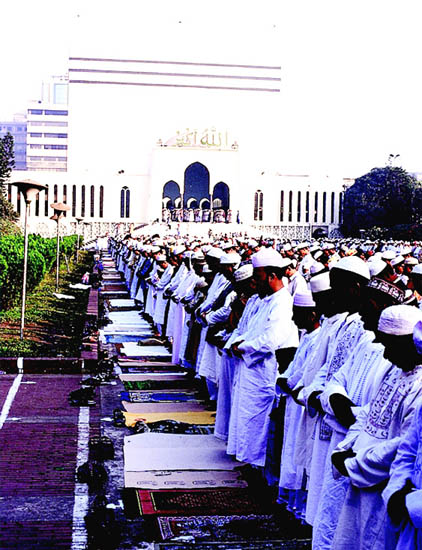
Baitul Mukarram, Dhaka
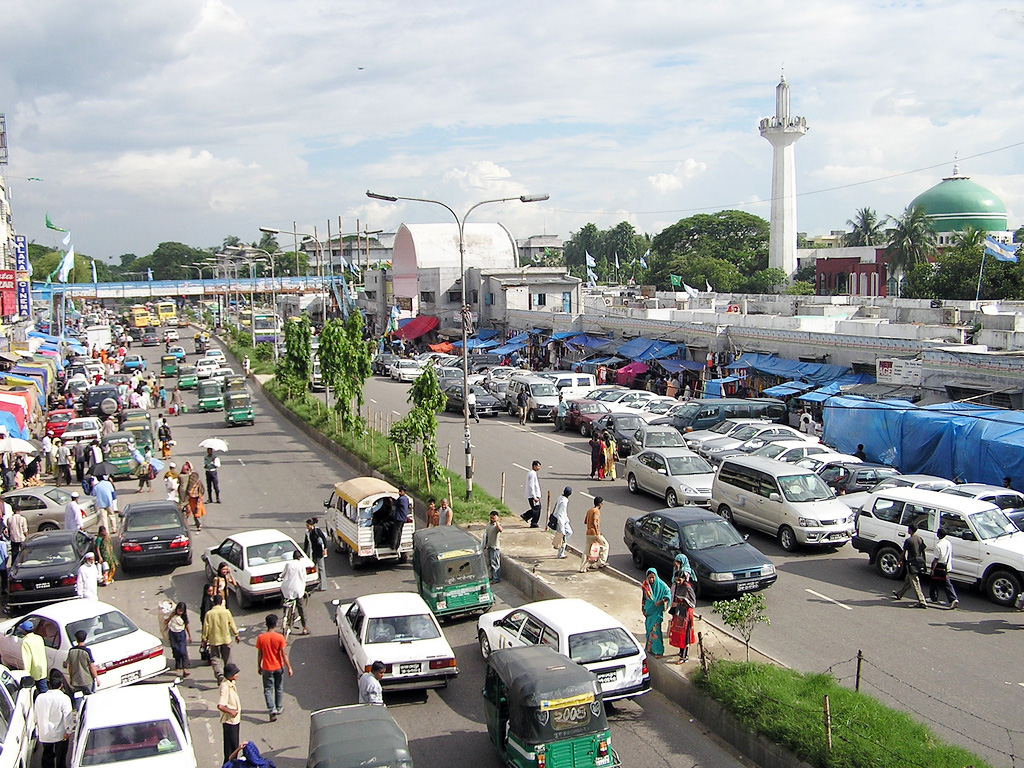
New Market area - a favourite place for the young

Dhanmondi Residential Area

Harvest time

Bull fight in village during festival
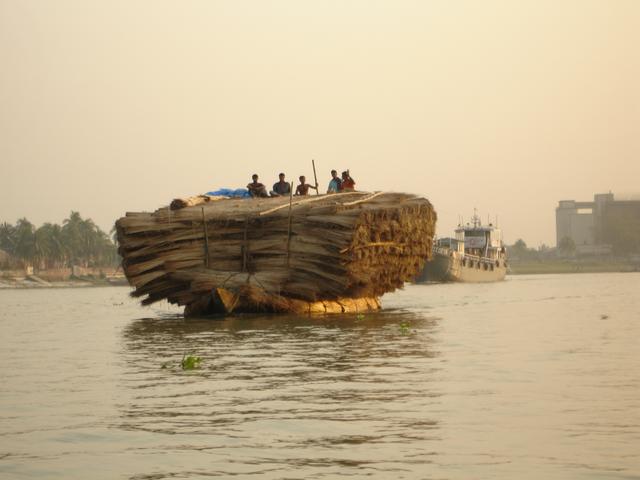
A river scene - overloaded cargo

Explosion in Kansat - April 2006
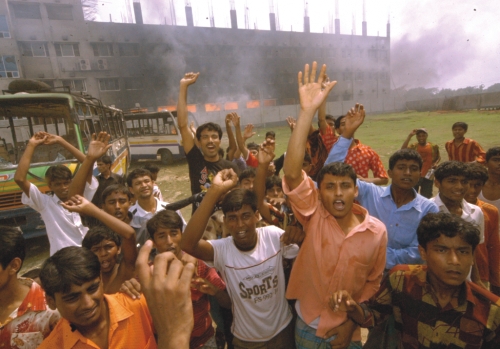
Garment factory put to torch
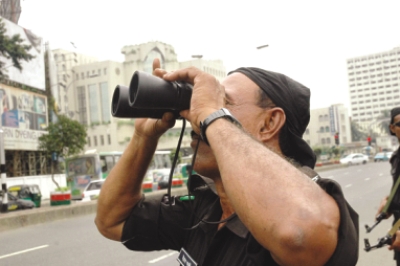
RAB (Rapid Action Battalion) vigilance

Unequal match!

Kungfu with police

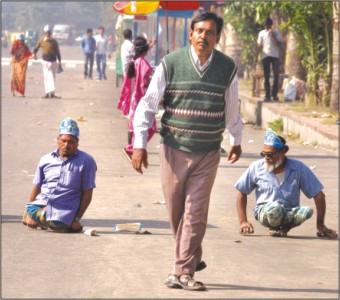
Handicaps not far behind
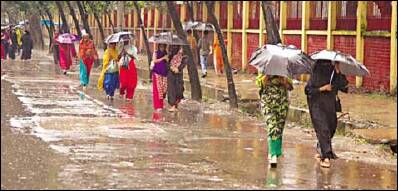
Braving the rain and inclement weather
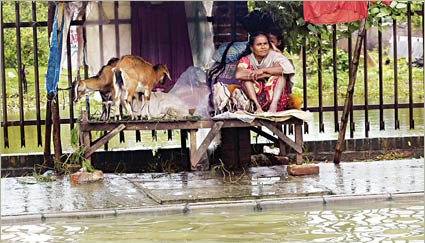
Coexistence
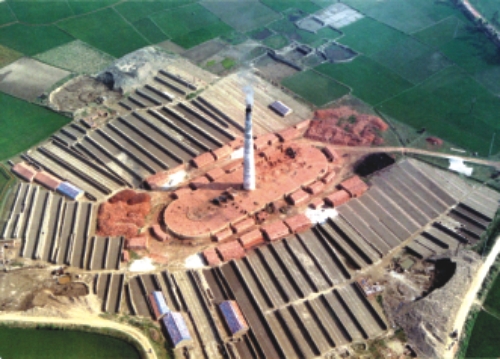
Dhaka's face marred by bulls-kiln brickfield built around

Leisure and 'chatpati' [read more in Phuchka stalls in Dhaka]

Tribal (adivasi) rally in the city
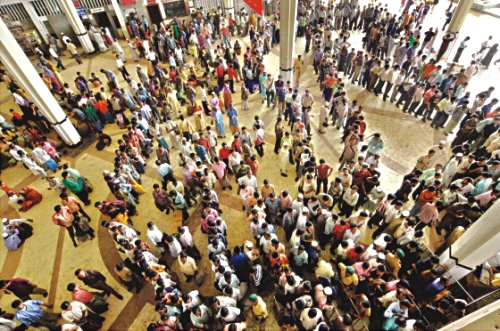
Long wait for a ticket
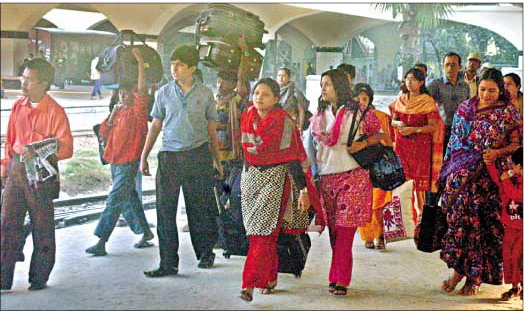
The lucky ones!

Homebound for Eid
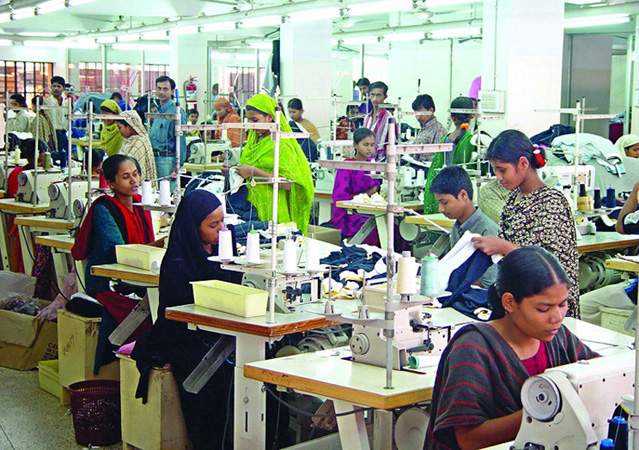
Garment ladies - the life line of country's economy

Bullock carts with sacks of grain to city

View of Cox's Bazar
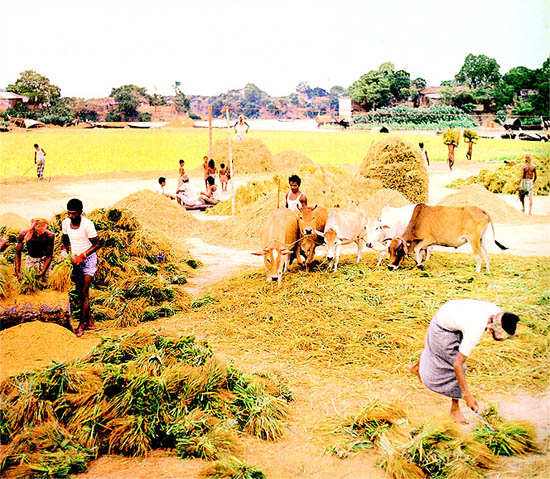
Rice thrashing

Ducks on the way to market
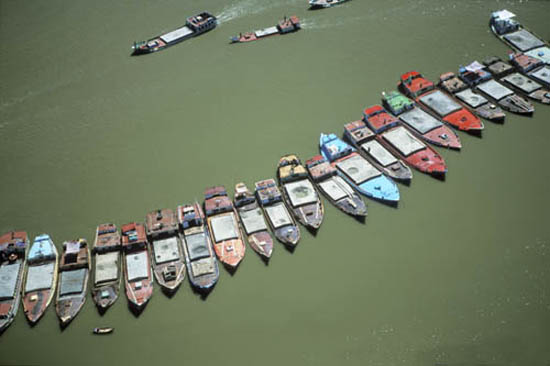
Trawlers for carrying earth
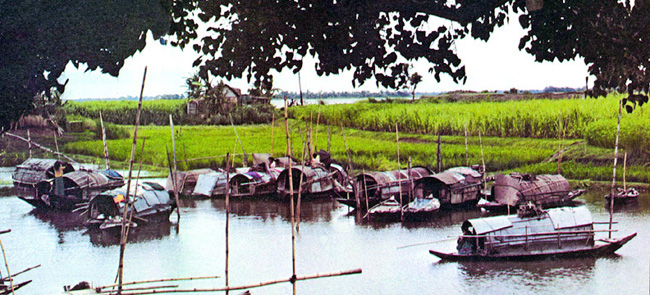
Snake charmers' (bede) boats


Pedestrians take risky steps on curb of Ramna overbridge as deck remain under foul water

Bamboo bridge (Shako) in village

Bargain over New Market foot overbridge

Sells for Tk. 5/-
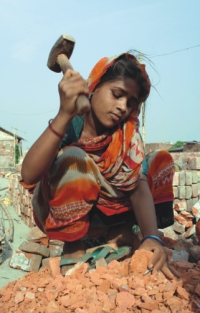
Hardway to earn a meal

Palm fruits in demand -------- innovative curtain for sanitary latrine in village
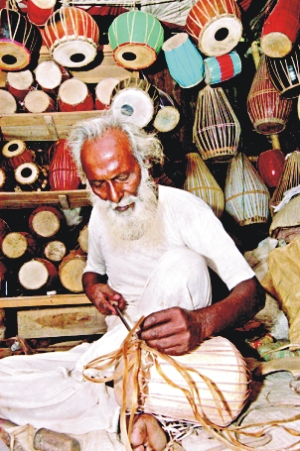
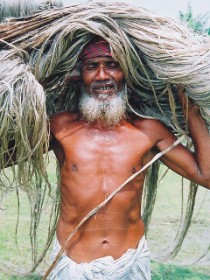
Tabla master (hand drum) ------ Golden fibre of Bangladesh (Jute)
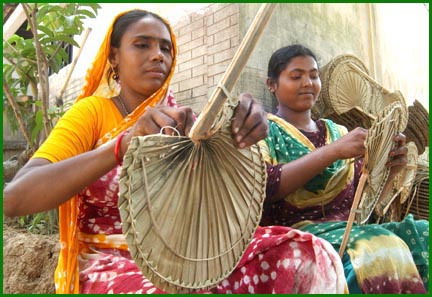
Common man's fan - made from palm leaf

Mason helpers pose for camera
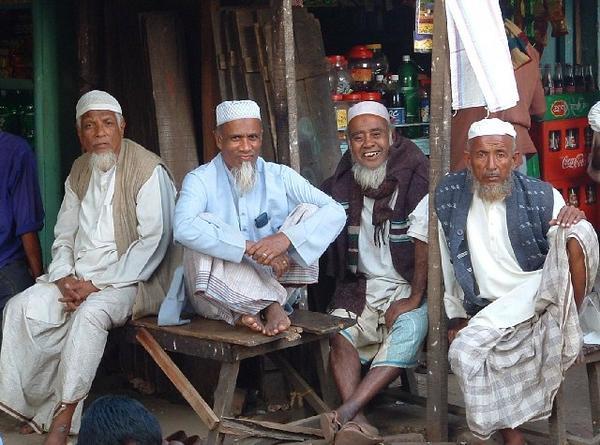
Four elderly in shop
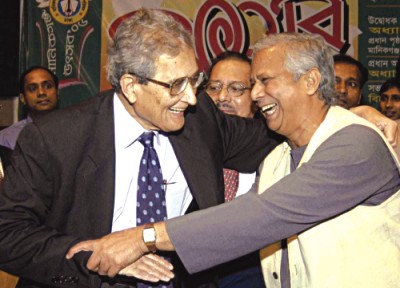
Nobel laureates Prof. Amartya Sen and Prof. Muhammad Yunus (R) at Dhaka

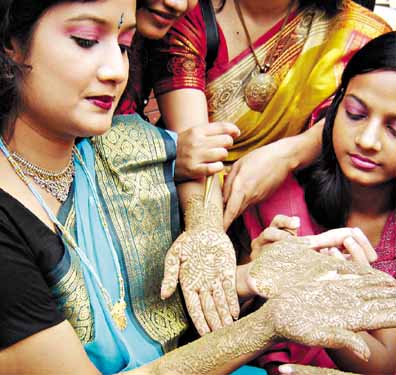
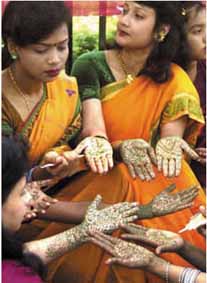
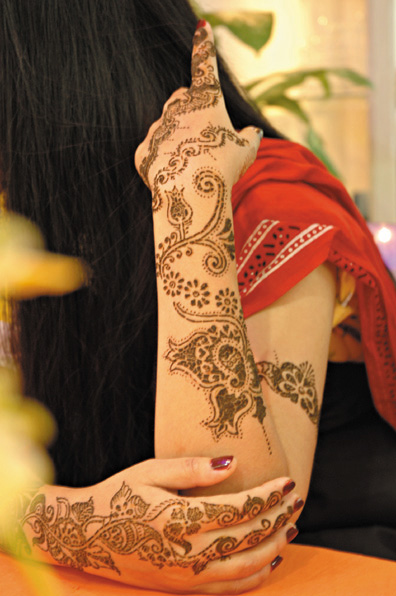
Henna or Mehndi - a symbol of tradition and joy


pic: sonali sokal


Henna or Mehndi is a traditional form of body painting which uses a natural dye made from leaves of the Henna / Mehndi plant.

Henna or Mehndi is the leaf of the dwarf shrub that is dried and powdered, and then made into a paste. The plant grows in warm climates like the Indian sub-continent, parts of Africa and in Middle Eastern countries. Henna is intertwined with many intriguing traditions and cultures, dating as far back as Egypt during ancient times, where it was known to have been applied to the toes and fingers of the deceased Pharaohs before mummification. The paste is even used to ward off evil spirits.

The tradition of applying Henna traveled to the Indian Subcontinent from Arabia hundreds of years back, when the Muslim rulers came to rule in India. This remains an important part of culture in the Islamic belt that spreads from the Middle East and goes beyond to the Far East. It has flourished in the Subcontinent both under Muslim and Hindu rules for ages. In Indian subcontinent, a wedding is incomplete without a mehndi ceremony. Henna symbolises fertility, and at weddings, it depicts the love between a husband and wife.

Henna's traditional decorating purposes vary from culture to culture. The most popular traditional use is tied closely with bridal preparation, weddings and Eid. It is the night before Eid, when the auspicious crescent has been sighted, women pool together in their living rooms in an atmosphere of merriment to apply mehendi in intricate patterns on each other’s hands and feet.

In modern days, most often, the Henna paste is prepared with tea, coffee, lemon juice, sugar and clove oils to create different hues. Cones are commercially available for use as opposed to applying it with sticks, which make designs more detailed and intricate. Designs vary from country to country. Henna is also applied in a thick layer on the palms.

Besides the aesthetic element, Henna is believed to hold special medicinal value. It is said to soothe dry skin, heal certain skin diseases, and reduce swelling.

Friday, December 29, 2006

Set for Eid-ul-Azha on Jan 01, 2007


Queue for ticket- Kamalapur railway station, Dhaka

Overloaded bus


Homebound passengers to celebrate the Eid-ul-Azha

Market bound cattles

Cattles occupy second Buriganga bridge approach deck at Nayabazaar

Camels from India fetch high price

'King of the market'- a bull from Faridpur with price tag of Tk.12 Lakh (US$17,400 approx)

Old Dhaka scenes and Minarets


Dhaka Central Jail Entrance

Aerial view of Central Jail

The Moghuls built their main fort here. When capital of the Subah-i-Bangala was shifted from Dhaka to Murshidabad in about 1717, Dhaka was made the seat of a Deputy-Governor of a sub-province comprising approximately of the greater part of present Bangladesh. The deputy-governor resided in one of the many abandoned palaces or forts of Dhaka. In 1763, the British Army officers stormed the city and occupied the fort. It was subsequently turned into Dhaka Central Jail in 1883 when other structures were built around it, and is the largest and oldest jail of Bangladesh. Over 11,000 detainees and convicts (about 250 of them women) are squashed into this prison originally built for 2,650 detainees.


Left: Central Jail watch tower and Minaret of mosque behind; Right: Guard of a local bank


Road over Dholai khal (canal) and mushrooming of second hand spare-parts shops

Second Buriganga bridge connecting Badamtali ghat to Jinjira

Bridge ghat ferry boats at Badamtali

Approach deck of the bridge - Badamtali end

Unauthorised trading shops grow underneath bridge deck

Mosques at Dholai khal (left) and Hatkhola (right)

Market and mosque at Tikatuli

Thursday, December 28, 2006

Some old buildings and Mosques in Lalbagh, Dhaka


Lalbagh Shahi Mosque - South view (Shaista khan Road)

East view (Kazi Reazuddin Road) near 'Posta'

Lalbagh Shahi Mosque minaret

Lalbagh Shahi Mosque, also known as Farrukh Siyar Mosque, is located within a few yards of the southern gate of the Lalbagh Fort at Dhaka. This is the largest Mughal mosque in Bangladesh, capable of accommodating some 1500 devotees at a time. It was built by Prince Farrukh Siyar between 1703 and 1706, while he was at Dhaka as a representative of his viceroy father Prince Azim-us-Shan. Due to a series of repair and extension works, the mosque now gives a contemporary look. A new minaret was built. The mosque still retains its original layout. Its outer dimension is 49.99m from north to south and 16.46m from east to west. Internally, it is 47.85m by 14.33m and the thickness of the walls is 1.07m only.


Small shops beside Fort south wall (Kazi Reazuddin Road)

Vegetable market at 'Killar Mor' (road junction of the Fort)

Outside view of Lalbagh Fort south wall and west kiosk

South West corner of Lalbagh Fort kiosk [outside view - Killar Mor ]

Jagannath Saha Road originating from south west corner of Lalbagh Fort [ Killar Mor connects Nawabganj in the west ]

Old Mansion of Jagannath Saha which bears the name of the road

Electrical shop for second hand gadgets on the road

Mosque at Jagannath saha road

A mosque on Lalbagh road


The Khan Mohammad Mridha Mosque on Lalbagh road is situated less than half a kilometre west of the Lalbagh Fort, in an area called Atish Khana in old Dhaka. Two Persian inscriptions - one over the central archway and the other over the central Mihrab, speak of its construction during 1704-05 AD by one Khan Muhammad Mridha. The name of the mosque is after its builder.
The large platform is 38.10m from north to south and 28.96m from east to west. It's height is about 5.18m from the ground level. Underneath the platform, are vaulted rooms on all sides except the eastern side. In the eastern side, there is a stairway which ends with a gateway aligning the central doorway of the mosque proper. It is through this gateway that one can reach the top of the platform.

Also see Lalbagh Area and Fort Incident.

Tuesday, December 26, 2006

A MoU for national election creates confusion


Saikhul Hadith Allama Azizul Huq of Khelafat Majlish (Left) and Abdul Jalil of AL

Nobel laureates meet at Dhaka


Bengali Nobel Laureates meet: Prof. Amartya Sen (L) and Prof. Muhammad Yunus meet at Dhaka on 25 December 2006


at Osmani Memorial Auditorium, Dhaka, on Dec 25 during the inauguration of 'Manikganj Utsab 2006'

Nobel peace prize winner Muhammad Yunus (3rd from Left) shakes hands with Nobel laureate Amartya Sen (left) at a function in the National Museum auditorium Dhaka on 25 December 2006. Chairperson ('Ain O Adalat'-famed) Fazle Hasan Abed (2nd from Left) and American international financier & philanthropist George Soros look on.

Monday, December 25, 2006

Christmas at Dhaka


Armenian Church and St. Thomas Anglican Church

Tejgaon church


Kakrail church

Devotees attend the Christmas service

International Christian Church, Baridhara


International Christian Church, Baridhara

National Poll in Bangladesh

AL led alliance parties agree to join National Poll on Jan 22, 2007 !

View of Hartal - Lotus square Motijheel C/A


for blockade of Bangabhaban


Hartal made effective

Blockade of Government house


Mayhem at Purana Palton


Cautious steps


Mayhem in Supreme Court


Army in action...


AL led 14 party alliance, Jatiyo party (E), LDP and Islamic Oikka Front rally on 19th Dec


BNP led 4 party alliance rally on 20 Dec 2006

Abdul Jalil of AL in terms with saikhul hadith Allama Azizul Huq

LDP in tight corner- Badruddowza & Oli

(Left) Hasina & Sajib Joy-- (Right) Hussain Md. Ershad, Sajeda & SK. Hasina

Tariq Zia & Khaleda
mother's blessings before submision of nomination paper

Breakthrough in backstage negotiations made it possible to reach an understanding over holding the ninth parliamentary polls in Bangladesh on January 22, 2007. During the last 57 days, the country witnessed unprecedented political turmoil in the form of demonstration, blockade, violence, clash, arson and mayhem in Supreme Court. More than 100 lives are already lost. People now heave a sigh of relief.

Saturday, December 23, 2006

Dhaka Madrasah to Kabi Nazrul Govt Degree College


Dhaka Mohsania Madrasah (photo 1890), now Kabi Nazrul Government College

Madrasah hostel, now Academic block Kabi Nazrul Govt. school

Now an office block
Dhaka Madrasah: It was originally established at Dhaka by a grant from the ‘Mohsin Fund’ in 1874 as Mohsania Madrasah, in the model of Calcutta Alia Madrasah established in 1780. Later, it came to be known as Dhaka Madrasah. It was the first government educational establishment for Muslims in East Bengal. The Madrasah aroused great interest among the Muslims of East Bengal. 400 students applied for admission in the first year, but due to shortage of accommodation, only 168 could be admitted. A new building for Madrasah was established on a piece of land east of Bahadur Shah Park (Victoria park) bought with a fund provided by Nawab Abdul Ghani.

The Madrasah opened an Anglo-Persian section that soon distinguished itself with excellent academic result. In 1882, the students appeared in Entrance Exam. Among its notable students were Sir Abdullah Sohrawardy, Justice Zahidur Rahim, Poet Kaikobad and Syed Mohammad Taifoor.
With introduction of a ‘New Scheme’ course in 1915, it was converted into Dhaka High Madrasah. In the following year, its Anglo-Persian department got separated and became the Dhaka Government Muslim High School. With the establishment of the University of Dhaka in 1921, the school was upgraded into a college and got a new name, the Islamic Intermediate College. It offered courses to prepare entrants in the Islamic Studies Department of the University. It continued to operate as a school-cum-college till 1968, when the college section got separated to form a new institution named Government Islamia College, Dhaka. Following the independence of Bangladesh in 1971, the college was renamed as Kabi Nazrul Government College in 1972, and in the same year, it was upgraded to a Degree College.

Dhaka's once tallest building


This dilapidated 5-storey Head Office building of Imperial/Standard Bank of India (now under occupation of Pubali Bank) located at Sadarghat crossing (SW corner) had the distinction of being the tallest building of Dhaka until mid 50’s, when 'Adamjee Group' constructed a 7-storied air-conditioned building at Motijheel C/A. Dhaka’s only lift installed in this building was an object of interest for the onlookers in the 40's.

Present view of Sadarghat road leading to IWTA (Inland Water transport Authority) River Terminal

Friday, December 22, 2006

Dhaka Officers' Club at Ramna


Officers' Club: main office building

Newly built Auditorium

Tennis courts

Covered badminton and swimming
Dhaka Officers' Club: It was established in 1967 on 4.5 acres land in a picturesque setting at Ramna (Bailey Road). Its membership is open only to government officers and the officers of semi-government or autonomous bodies. The land with a colonial building was once given to the club by the PWD (Public Works Dept.). The government also provided funds to construct an auditorium, covered badminton complex, swimming pool and tennis courts etc. The club has now about 2,000 members and run by an executive committee headed by the cabinet secretary of the government. Its members are elected through secret ballot every two years. The club has a library, a newly built 2 storey auditorium, three tennis courts, and facilities to play badminton, table tennis, billiard, cards, chess etc.
The Officers' Club organizes contributory dinners and ‘housie sessions’ periodically. It also has a women's committee that designs and implements social welfare activities with funds generated by the club. To generate income, its auditorium and pavilion is rented out to outside parties seeking to use the space for specific functions including weddings.

Tuesday, December 19, 2006

Prestigious Girls' Colleges


Eden Girls' College in Azimpur


Girl Scouts

Old location of Eden Girls' college at Bakshibazar, now Badrunnesa Degree College
Eden Girls' College: Originated from a school for 'Brahmo' girls established by a philanthropic society in Dhaka in 1873, this school started in a private house at Farashganj. In 1878, the school was merged with another private girls' school to form Dhaka Female School. The same year, the school administration took the initiative to bring it under government management and proposed it be called Eden Girls' School after the Lieutenant Governor Sir Ashley Eden. Given its new status, it started functioning at a new location at Laxmibazar.

Eden was the first government girls' school in Bengal. In 1896-97, it had 130 students. Intermediate classes (grades XI and XII) were introduced in the school in 1926. Since then it got the name of Eden Girls' High School and Intermediate College. A.K. Fazlul Huq, the education minister, shifted the school to a new building on Abdul Ghani Road, later known as Eden Building. In 1947, the government decided to establish its Provincial Secretariat in this building and the college got a temporary address in a part of Curzon Hall. Frequent shifting put the college into an uncertain situation. With an intention to merge with Quamrunnesa School and College (pic below), it was shifted to the premises of the latter in Tikatuli. In 1948, the college sections of these two institutions merged and formed Eden Girls' College. The new college was located at Bakshibazar in 1948. The school sections of the two colleges were merged to form Quamrunnesa School at Tikatuli.

The current campus of the Eden College was developed in 1962 on 18 acres of land at Azimpur, and the degree programmes opened in the new premises, but its intermediate section continued to stay at Bakshibazar. Subsequently, the Azimpur campus of Eden introduced its own intermediate classes. The Bakshibazar section introduced independent degree classes, taking afterwards the name of Government Girls' College, and later, Badrunnesa College. The Azimpur campus got its independent identity as Eden Girls' College in 1963. In 1999, Eden's library had 33,000 books and subscribed to about 1,200 journals and newsletters. Students of the college take part in Rover Scouting and national level sports competitions in the field of hockey, badminton, handball and athletics.

Quamrunnesa Girl's School & College Tikatuli- another important institution once linked with Eden Girls College

Quamrunnesa School gate, Tikatuli


Holy Cross Girl's School & College, Tejgaon

Chemistry class

Jubilant faces Holy Cross School with
highest GPA 5 in SSC exam 2006

Pak PM's wife Rukhsana Aziz visits her old school (Holy Cross School) in Nov 2005
Holy Cross Girl's School and College: Founded in Tejgaon, Dhaka, in 1950 by the Society of the Congregation of Sisters of the Holy Cross of the Roman Catholic Church, it started as a kindergarten with only two children to attend classes. By January 1952, a large number of children were registered and the kindergarten was converted to a primary school. In October 1953, it was made a high school. The school got recognition by the Dhaka Board and the first batch of its students appeared at the SSC examinations in 1966. By that time, it had humanities and science sections. It opened commerce section in 1999.

The school distinguished itself with excellent academic results of its students and the activities of Girl Guides, Girl Scouts and Yellow Birds. Its students take part in extra curricular activities through recitation club, quiz club and debate club. The school organises science and social science fairs every alternative year. Students of this school also take part in competitions in television and radio, organize education weeks and seminars. In 1997, the government of Bangladesh awarded the school with the 'Best National School' prize.

The school compound has a land area of 0.73 acres. It has well-equipped laboratories, library, a hall room, and playground. The school is open for students of all religions and castes. In 1999, it had 1,000 students in the morning shift and 500 in the day shift. The number of teachers was 59, of which 7 were male.


Viqarunnisa Noon Girls' School & College building

Viqarunnisa Noon School - south gate, New Bailey road

Guardians rush for admission application form in Viqarunnisa Noon School

Exam session


Rejoicing success of highest number of GPA 5 in HSC 2006

Viqarunnisa Noon School and College: This school was established in 1952 at Baily Road, Dhaka, named after Viqarunnisa Noon, wife of Firoz Khan Noon, the then Governor of East Pakistan. Started as a preparatory school with only a few children, it expanded very soon into a high school and in 1956, prepared students for Senior Cambridge Examination.
The school earned reputation for quality education and excellent results in public examinations. In 1978, it started a college section with higher secondary courses. Under excessive pressure of new admission, the school had to gradually introduce multiple sections, afternoon shifts, and in 1995, a new branch in Dhanmandi. Its main campus is spread over about 6 acres of land. It conducts education in both English and Bengali mediums in humanities, science and commerce programmes. The school is for girls only and in 1999, had 11,000 students, of whom 2,000 were in the college section. It had 212 teachers, of whom 15 were men. The students of the school take active part in cultural programmes, debates and sports.

Secondary Schools: 19th to early 20th century


St. Joseph school- north block

St. Joseph south block

Saint Joseph High School and College: is a Catholic secondary school located at Asad Avenue, Mohammadpur, Dhaka. The school was originally founded by Brother Jude, an American Missionary member of Congregation of Holy Cross in 19 March 1954 at 16 Monir Hossain lane, Narinda in the old section of Dhaka The following year, a single story building was constructed at 32, Shah Shaheb Lane, Narinda for the school. To accommodate increasing enrollment a new complex was constructed in Mohammadpur and moved to its current location in 1965. The medium education of school was English and the institution had a General Cambridge Examination (GCE) based education structure. The first batch of boys from St. Joseph sat for the Cambridge Examinations in that year.

After the liberation war in Bangladesh the school was registered under Dhaka Board and medium of education changed to Bangali although it was recognised for emphasis in English. The last of the Cambridge groups took their examinations in 1973. In 1999, it became a college by opening higher secondary section. The institution currently has both English and Bengali medium based education for secondary level.

Saint Joseph one of the topmost secondary schools in the country, in terms of the quality of education and success records in public examinations, discipline, practice of leadership, sports and co-currilar activities. The students of Saint Joseph are known as "the Josephites". The alumni of the school had formed the Saint Joseph Old Boys Association (SJOBA), which continues to organize regular events and programs in and outside the school boundaries. It is for boys only and in 1999, it had about 900 students and 31 teachers, of whom 9 were women.


Entry gate- Dhaka Collegiate School

Dhaka Collegiate school- main building

Collegiate school- extension


Dhaka Collegiate School: It was the first government high school of undivided Bengal. The school was established at Dhaka in 1835 as an English Seminary school by the British government. Mr. Redge, an English missionary was the first headmaster. It began its journey in a hired house near Bahadur Shah Park (Victoria park) with 139 students, of which 8 were Muslims. Brajosundar Mitra (founder of Brahmo samaj), Nawab Abdul Ghani and Abdul Ali (founder of Moulvibazar) were the students of this school at its early stage. In the premises of this school, the foundation of Dhaka Intermediate College was laid down in 1841. The school building was rebuilt to accommodate the college in its first floor. The school was renamed Dhaka Collegiate School, and remained on the ground floor for quite a number of years. Khan Bahadur Nawab Abdul Latif, CIE worked as a teacher in this school at that time.

The school was separated from the college and put under control of the inspector of schools in 1908. Since then it got the status of a Zilla School, although it continued to be called Dhaka Collegiate School. Ramesh Chandra Majumdar, Jagadish Chandra Basu and Buddhadeb Basu were associated with the school as student or teacher. The school maintained high academic records and boasted of securing top position 8 times out of 9 consecutive years. It had a competitive edge over other academic institutions in football, cricket, hockey and basketball. Famous Alumni are Nawab of Dhaka Khwaja Abdul Ghani, physicist Dr. Meghnad Saha, Bir Shrestho Matiur Rahman, linguist and martyred intellectual Munir Chowdhury, poet Buddhadeb Basu. At present, it is located at Sadarghat crossing, west of Bahadur Shah Park and south of Jagannath University College. This boys' school now offers courses in humanities, science, commerce and agriculture. In 1999, it had 1,850 students and 53 teachers, of whom 20 were female.

The oldest government school of the city on record (established in 1835), the Collegiate School is at present encircled by a tempo stand, makeshift shops and businesses and illegal offices of various political organizations.


Armanitola Govt. High school, Armanitola

Armanitola school field


Armanitola Government High School: This school was established in 1904 at Armanitola, Dhaka, as an experimental school for the only Teachers Training College of East Bengal at that time. The school started in a vast campus with red brick buildings constructed in the British style, in a location in front of the Tara Masjid (Star Mosque), a famous monument of Muslim architecture. Within a few years after its establishment, it drew attention of the city dwellers for its performance as an institute of excellence in education, sports and culture. The golden period of the school, according to ex-students, was between 1928 and 1958. During that period, Shamsuddin Ahmed, an assistant teacher gradually rose to the position of the headmaster.

During the War of Independence in 1971, a large number of students of this school became freedom fighters and many gave their lives to free the motherland. Lt. General (Retd.) Mir Shawkat Ali Bir Uttom (BU), Air Vice Marshal (Retd.) Sultan Mahmud BU, Late Abul Manzur BU are just a few among the many ex-students who have been decorated with the Bir Uttom and Bir Pratik awards. Among the scholars, Dr. Mahfuzul Haque secured first position from Dhaka Board in the SSC examination of 1946, while Manjurul Karim came up with record breaking marks in the SSC examination of 1952. The school has also produced some of the top sportsmen of the country like Mahmudur Rahman Momin, Bashir Ahmed, Protap Shankar Hazra, Abdus Sadek, Jamal Haidar and Shabbir Yousuf.

The school is divided into four houses which compete against each other in different sports, debates and other extra curricular activities. The school admits only boys and as of 1999, it has been offering courses in humanities, science and business studies to a total of 1,357 students. The number of teachers was 54, of whom 12 were female.


St. Gregory School

St. Gregory School Hostel


St Gregory's School: Located at a place near Bahadur Shah Park (Victoria Park), Dhaka, was established in 1882 by Father Gregory de Groots, a Belgian Benedict priest. It was originally intended for Eurasian students as its first man-in-charge knew no other language than his native Flemish. It drew little public interest at the beginning. It was closed twice before 1889 and took a fresh start with standards 1 to 6 under Holy Cross Father Francis Boers as its new headmaster. The school reopened in the ground floor of St. Francis Girls' School. It was shifted to a new site in 1896, its enrollment started to increase and in 1898, it had about a 100 students including 6 Bengali boys and 2 Bengali girls.

The school conducted education and examinations in European style until 1923, when it sought and received permission to come under Board Examination leading to its recognition in 1924. The school ran as a co-education until 1912, when the girls joined St Francis Xavier Girls High School. Ever since it is a boys' school. After creation of Pakistan in 1947, the school started teaching in English medium, and also ran Bengali medium sections. Notre Dame College began here as St. Gregory's College.

The school earned reputation for excellent results of its students in Matriculation (S. S. C.) examinations. It demonstrated well in sports, science exhibitions, cultural meets and the scout movement, for which its alumni take pride in being Gregorian. In 1999, it had 1,540 students studying in classes I to X. That year it had 43 teachers, of whom 11 were women. The school can boast of the many eminent personalities who are in the list of its alumni. To name a few, Dr. Amartya Sen (Nobel Laureate Economist), Tajuddin Ahmed (first prime minister of Bangladesh), Dr. Kamal Hossain (former law and justice minister of Bangladesh), and Dr. Osman Farooq (education minister of Bangladesh, 2001- )


Pogose School- main building


Pogose School - extension block

Pogose school students passing a leisurely day as teachers enforce strike for nationalization of school

Pogose School: This school was established in Dhaka in 1848, as the first private school of the country by N P Pogose, an Armenian merchant and Zamindar. It was at first housed in the ground floor of Pogose's residence and was known as Pogose Anglo-Vernacular School. In 1855, it was moved to a rented house owned by J C Panioty of Armanitola. Five years later, it was moved to a two-storied building at Sadarghat, from where it was finally shifted to its present location at Chittaranjan Avenue. In 1867, the school had 500 boys on its roll and became the largest school in Bengal. The school was managed as a proprietary institution and in 1871, about a year after the death of Pogose, it was taken over by Mohini Mohan Das, a banker and zamindar. After the death of Das in 1896, his estate kept the school up .

The school went through a difficult time during the Second World War. The school was in a state of near collapse during the 50s. Many famous people were once students of Pogose School. The list includes persons like Sir K.G. Gupta ICS (first Indian Privy Councilor), Dr. P.K. Roy (the first Indian Principal of Dhaka College and later, Professor of Calcutta Presidency College), Dr. Aghornath Chatterjee (first Indian D Sc, father of Sarojini Naidu), Ataur Rahman Khan (Chief Minister of East Pakistan, and also Prime Minister, Bangladesh), Zahirul Haque (Director of Banking Control, Karachi), and Babu Mathuramohan Chakraborty (founder, Sakti Ausadhalaya, a pioneer in manufacturing Ayurvedic medicine).

In the mid-1980s, the school started gradually falling behind in competition with the rise of new government and private schools. In 1999, it offered courses in humanities, business studies and science and it had 38 teachers (12 women) and 2,030 students, of whom 438 were girls.

Muslim Govt High school

Muslim Govt High School: Dhaka Madrasah was established in 1874, in a location east of Thomas Anglican Church and north of Bahadur Shah Park (Victoria park) with the help of Mohsin fund. As part of modernization scheme of the Madrasah, an Anglo Persian Department was opened in the Madrasah in 1906. The Anglo Persian Dept. was renamed in 1916 as the 'Government Muslim High School' and began operating in a 'Dak bungalow' in the compound of Dhaka Collegiate School. In 1945, the school was shifted to its present location south east of Bahadur Shah Park.

The medium of education from class VI and above was English. Islamic dress code was made compulsory both for teachers and students, and it was later relaxed. The school maintained a good library and archive from which many things about its past could be known. Kazi Jahirul Haque of Kazibari, Ashek lane, became Headmaster of the school in 1916. The school had 11 teachers, one drawing teacher and one drillmaster at that time. Eminent writer Kazi Emdadul Haque was a teacher. In 1906-7, the number of students was 265. The school’s academic performance came to prominence in the 30’s and 40’s. Khan Bahadur Abdul Hakim (ex-Director of education), Prof. Abdur Razzak (national professor) and Justice B.A. Siddiky, Major General Khawaja Wasiuddin, Hafizuddin Ahmed (ex-IG), Educationist Abdulla al- Muti Sharfuddin were students of this school. The number of students at present is 500. The old red coloured building has been demolished and a new building constructed.


Nabakumar Institute, Bakshibazar

Nabakumar Institute - playfield


Nabakumar Institute: This institution was established in 1916 By Zamindar Nabakumar at Bakhsi Bazar area, south of present Badrunessa Girls' College and the Dhaka Alia Madrasah. Though named an institute, it was a school until 1973, when it opened a college branch. In the early 50’s the school produced many players at national level in football and athletics and earned plaudit in various sport tournaments.

(Shaheed) Matiur Rahman, a recognized name in the history of national movement of 1960s, was a student of Nabakumar Institute. In 2001, Nabakumar Institute had about 2,000 students while the college had about 400. The school and the college together had sixty-one teachers, forty of whom were teaching in the school and the remaining in the college. The Institute accommodates its academic and administrative facilities in two buildings, one four storied and the other six storied.


West End High School - old building

Academic block extension

Front block - extension

West End High School: Established in the 1930’s, the secondary school is located in the western fringe of Dhaka at Lalbagh, south of Azimpur Government Colony. This school building was expanded in 1939 and the library was established with the help of money donated by Bishnu Charan Das. The school attained excellent academic results during 60’s and 70’s. To accommodate the rush of admission, the school building expanded further and new blocks were constructed. The school has 2200 student of which 397 are female. Number of teachers are 152, of which 6 are female.

Sunday, December 17, 2006

Celebration of Independence Day at Dhaka!

Jubilation overshadowed political turmoil yesterday, 16 December 2006, as the nation celebrated the 35th anniversary of its Independence.


Govt. Staff Colonies - from late 40's to early 50's


Azimpur Colony, Dhaka

Motijheel AGB Colony

Motijheel Colony

Colony for high officials at Ramna

Aminabad Colony - private

Green road Government Colony

Baily Road Officers' Colony

Baily Road Officers' Colony

Officers' quarters at Eskaton Garden Road


In 1840 James Tailor wrote: "Dhaka with the beautiful houses on the riverbank reminded one of Venice." But it was during the decade of the 1840s that those buildings began to wear away. When people used to come to see those buildings they only saw some structures on the verge of ruination.

The most picturesque area of Dhaka was located on the banks of the Buriganga, which was under the possession of the elite class. The mid 19th century saw the emergence of the Hindu professional/middle class in East Bengal. They began to buy some of the old houses or construct new ones. While the middle class was spreading in the town, the poor were also getting poorer.

Between the 1880s and 90s, residential areas like Wari, Gandaria, Tikatuli, Swamibagh for the middle class elite were created. Those areas used to be parts of the main town. Much later, in the 30s and 40s of last century, Purana Paltan and Segunbagicha also rose as residential areas. The architectural pattern of these houses was different from that of the old areas. The residential houses, mostly one to two-storied, looked beautiful with some open space in front. The town was expanding towards the north where government was building the Secretariat and University. In the forest area of Ramna, rich people were buying land. After the partition of Bengal was nullified, this trend slowed down and Dhaka reverted back to the status of a district town. Development gradually stopped. A cantonment and airstrip came up in the north.

After partition of India in 1947, number of officials and the business communities grew in Dhaka, and above all, a sudden onrush of people to the new provincial capital contributed to more residential needs. Arrival of large numbers of Muslim population from India led to a 100% increase of population, which in turn led to new settlements in the vacant areas within the city, as well as in the outskirts of Mohammadpur and Mirpur. Dhaka's urban area increased from 6 square miles in 1947 to 25 square miles within a decade. Semi permanent sheds for government staff started in the Nilkhet and Palashi Barrack (established by the English in the post-Sepoy war period). In 1949-50, 3-storied colonies started in Azimpur and Motijheel. For top officials, a colony was built in Ramna and Eskaton. The construction of the New Market was completed in 1954.

The areas from Purana Paltan to Naya Paltan, Eskaton to Maghbazar, Siddheswari and Kakrail to Kamlapur, through Rajarbagh and Shantinagar - all came to be occupied. Motijheel, once desolate and on the fringe of marshes and swamps, was earmarked as a commercial area in 1954. By that time, the area north of the Nawabpur Railway crossing up to Purana Paltan was developed as an open area with the stadium (present Bangabandhu National Stadium), forming the nerve centre of sporting activities and the Jinnah Avenue (now Bangabandhu Avenue) was laid to form the main thoroughfare for the western side of this expansive open area. In the 1950s, for the first time, a dual carriageway was built along the Jinnah Avenue and extended up to the Airport.
The sudden influx of population in the post-1947 period created the 'new Dhaka' in the available highland north, north-east and north-west of Ramna. The 'old Dhaka' of the Mughals, nourished by the Nawab family in the late 19th and early 20th century again reverberated with life.

Saturday, December 16, 2006

16 December: A memorable day for Bangladesh!


Commandos

Bangladesh provides UN the largest Peace keeping contingent in Africa and Asia;
'Banbat' group in armoured car somewhere in Liberia, West Africa

Friday, December 15, 2006

Nation pays homage to martyred intellectuals


A crow sits on the poorly maintained plaque where the names of the Dhaka University students, teachers and staff, martyred in 1971, are obscured by droppings


2006 Nobel Peace Award ceremony, Stockholm & Oslo


Nobel laureate Dr. Yunus waves to 'Flame of Peace'


Grameen Bank Logo


Nobel Peace Medal


Dr. Yunus with Swedish Minister of Foreign Aids in Stockholm

Nobel medal and diploma presented to Dr. Yunus


Chairman of Nobel Committee hands over the 2000 Nobel Peace prize in a ceremony to Grameen Bank and Dr. Yunus

Mosammat Taslima Begum of Grameen Bank and Dr. Yunus with prize

Speech during the award-giving ceremony at Oslo Town hall, Oslo, Norway


Dr. Yunus with daughter soprano Monica Yunus

Dr. Yunus speaking at news conference on 13 Dec 2006, a red christmas tree is hanging

Dr. Yunus signs the bottom of a chair whilst visiting Nobel Museum

Dr. Yunus with Swedish king Carl XVI Gustaf and Queen Silvia at the royal palace on Dec 13, 2006

A general view of Stockholm City Hall - 1300 guests, Nobel Laureates and Swedish Royal family attended the Nobel banquet on 10 Dec 2006

Banquet tables

British singer Mick Hucknall performs on stage

Singer Lionel Richie performs

Paulina Rubino from Mexico and Rihanna from Barbados

Egyptian singer Hakim performs on stage

British singer Yusuf Islam, formerly known as Cat Stevens


Paulina Rubino of Mexico -- soprano Monica Yunus


Angelica Huston and Sharon Stone attend concert

Traditional Bangladeshi performance

'Nritranchal' of Bangladesh perform Peacock dance in the concert

Dr. Yunus greeted in the concert

Lionel Richie, Sharon Stone and Hakim flash victory sign at a press conference before annual Nobel concert in Oslo, Norway

Angelica Huston and Sharon Stone salute Nobel Peace winner

US actress Sharon Stone embraces Dr. Yunus during concert

Dr. Yunus next to Norwegian crown prince Haakon and his wife Malle-Marit

Taslima Begum of Grameen Bank, Dr Yunus with wife Afrozi, and daughters Monica and Deena waving at people


Taslima Begum of Grameen bank and Dr. Yunus wave to hundreds of people gathered below the hotel for a torchlight procession in Oslo, Norway

Wednesday, December 13, 2006

Old Fulbaria Rail Station turned into Bus Stand


Fulbaria Railway Station - Arrival of Lord and Lady Curzon in 1904 (photo: Fritz Kapp)

Built for Provincial Secretariat Building during 1910's (now Dhaka Medical College & Hosp) - Railway track seen in the foreground

Tongi Railway bridge under repair in 60's


Old Fulbaria Railway Station turned into Bus Stand (south of Nagar Bhaban) - photo: Mr. Jafrullah


Rly Head Office, Ramna, Dhaka- vintage coal-burn steam engine in display


New Railway station at Kamlapur, Dhaka

Platform - Kamlapur Railway Station (photo: during Eid holidays)

Train on the move

Inside of a coach

Engine - old and new

Old engine of goods

Railway Office at Ramna, Dhaka


Fulbaria Railway Station: In the Mughal period, Dhaka saw dramatic rise and development due to its geographical, political and administrative importance as the capital and later as the sub-capital of Nawabs of Bengal as a wealthy and resourceful province (its flourishing trade and manufactures, especially the Muslin). The city stretched seven to ten miles along the Buriganga River and up to two and a half miles inland. The suburbs extended from the Buriganga to the Tongi Bridge on the north, and Mirpur- Jafarabad to Postogola in the east. The city with its suburbs was said to have a population of some 900,000.

The decline of the political power of the Nawabs of Bengal and the rise of the British East India Company led to the waning of the administrative importance of Dhaka in the late 18th century and had a catastrophic impact upon the population and physical boundaries of Dhaka. In 1801, the city had a population of some 200,000, and by 1840 it dwindled to 51,636. Most places became totally desolate.

Since mid-19 century, a new era for the city began ushering in a new phase of development when the British in 1862 opened up a 53.11 km broad gauge rail track from Darsana to Jagati. Next section, a meter gauge, was opened between Dhaka to Narayanganj, a distance of 14.98 km on 4th January 1885. In 1895, two more sections of meter gauge opened between Chittagong and Comilla (149.89 km) and between Laksam and Chandpur (50.89 km) as part of Assam Bengal railway.

Narayanganj-Dhaka rail track was extended upto Mymensingh in 1885-86. The lines laid almost parallel to the Mughal road from Tongi to Tejgaon, Karwanbazar to Shahbagh, then it formed a loop around Ramna and turned towards the east cutting through the Nimtali-Fulbaria area.

The placement of the railway line gives an idea about the existence of the main city in the areas south and west of the loop. Fulbaria area was developed into a big complex for the Railway including railway station for Dhaka. That changed the northern side of Nimtali and Nawabpur. Suburb of Segun Bagan, Purana Paltan, Dilkhusa and Motijheel developed and a thriving educated community moved over there from south. Curzon hall, Viceroy’s house, Institutional buildings and spacious Bungalows made Ramna a pleasant area away from din and bustle.

After Partition of 1947, the picture was totally changed, city population increased manifold and there was acute shortage of accomodation. For Government housing, temporary barracks were built on empty land of Plassey (Palashi) and Nilkhet, and flats were built in Azimpur and Motijheel area. Industrial zones were set up in Tejgaon. But, the rail line passing through the heart of city stood on the way of city's proper development.

Thus, in mid-1960’s the railway track was shifted eastward after Tejgaon and rejoined the old track near Swamibagh-Jatrabari cutting through Rajarbagh, Kamlapur and Bashabo. A new Railway station was built at Kamlapur. The old railway track has since been transformed into a link road, connecting Karwanbazar with Jatrabari through Nilkhet, Palashi, Fulbaria and north of Wari and Narinda, bearing the name of Sonargaon Road. Fulbaria Rail Station (now extinct) that stood at the space south of City Corporation Office (Nagar Bhaban), is now used as a Bus Stand. [map of Bangladesh Railway]
(for some recent pics of Rail platform and yard: see Kamalapur Rail Station)

Tuesday, December 12, 2006

Flower & handicraft shops on Shahbagh - University road


wholesale market


Shahbagh road opposite to National Museum


Flower trade on road: About 35 traders have been plying their flower and handicraft trade on the footpath of Shahbagh, which is adorned with different kinds of home and foreign flowers like gladiolus, rose, chinabox, orchid, gipsy, marigold and tuberose. Some florists are also doing their business, encroaching on government land at the Shahbagh crossing in collusion with come city corporation officials, ward commissioners and student leaders.

The Dhaka City Corporation plans a drive to clear the footpath in front of the National Museum at Shahbagh, said a high official of the corporation’s estate department on Tuesday. When the occupiers come to know of such drives, they remove their goods and leave, and then return after the drive ends. The florists have teamed up as Shahbagh Flower Traders’ Association and seek a stay order from the court whenever the corporation initiates a drive, the official said. The vendors say that roadside shops had been mushrooming, through paying extortion money to linemen, police and local goons.

Winter migratory birds arrive


Mirpur Ceramics lake, Dhaka

Mirpur zoo lake, dhaka

Netrokona haor

Marsh land


Hakaluki Haor, Sylhet

Peelkhana lake, poachers on right


Poachers sell birds


Jahangirnagar lake

Winter Guest birds from Himalayas and far away places like Siberia move to relatively warm swampy lands in Bangladesh to escape the freezing cold, and feed on snails and tiny fishes, which are abundant during this part of the year in the rice crops in haors, baors and the swamps in the coastal areas. Birds start arriving from early November and stay till March-April.

An estimated 500,000 birds, about 150 species mainly ducks travel to Bangladesh each winter. The wetland environment, some of the famous species that visit Hakaluki include the great crested grebe, widgeon, egret, large egret, heron, night heron and snipe.

The wetland hosts a tenth of all migratory birds that arrive in Bangladesh every winter. Hakaluki Haor (water body), the biggest lake in the country is spread over Sylhet and Moulvibazar districts, which covers 45000 acres of land. [map & images of Hakaluki Haor]

The arrivals of the flocks provide winter entertainment for tens of thousands of residents who travel to suburban areas to watch the birds. Bangladesh Bird Watchers' Society and Natural Conservation Committee organize bird watching festival each year at Jahangirnagar and Mirpur Ceramic Lake. Bird lovers feed them and photographers come in groups to take pictures. The country has its own 400 species of birds, the number falling rapidly as their habitat comes under attack from urban and industrial encroachment. The number of birds is also decreasing as hatcheries, duck farms and other commercial activities thrive in the wetland. Besides, organized gangs of poachers hunt birds after mid-January when the winter chill and fog subsides.

[link to The World Conservation Union, IUCN]

Monday, December 11, 2006

Nimtali Kuthi - 1st Colonial Building


Nimtali Palace

When the capital of the Subah-i-Bangla was shifted from Dhaka to Murshidabad in about 1717, Dhaka was made the seat of a naib-nazim (Deputy-Governor of a sub-province) comprising the greater part of present Bangladesh.

Nimtali Palace was built towards the end of the Mughal rule in Dhaka as a residence of the naib-nazim (Deputy-Governor) of Dhaka Province in 1765-66. It was situated in the Nimtali ward and popularly called the Nimtali Kuthi (Nimtali Palace). All have disappeared over time, but only one gateway (Nimtali Deuri) of the palace still remains.

The naib-nazim, Nawab Jasarat Khan resided in one of the many abandoned Mughal palaces or Forts. In 1763, as a reprisal after Nawab Siraj-ud-Dowla’s attack on Calcutta, the British Army officer Lt. Swinton stormed into Dhaka and occupied the 'fort' as his residence. The naib-nazim who lived in the main fort in Dhaka (the present central jail) was not in Dhaka, and he was taken as a prisoner by Mir Qasim for his secret liasion with the British.

In 1765, Lord Clive re-appointed Jasarat Khan as the naib-nazim of Dhaka. He found his residence occupied so he stayed in the Boro Katra, another old palace of the Mughals. Swinton built a new residence at Nimtali hastily and completed by 1766 -- the first noted building built during the Colonial Period in Dhaka.

Nimtali Palace occupied a considerable area on the northern side of the city between the modern Nimtali Mahalla and the High Court building and consisted of a number of separate buildings. Judging from the only extant gateway, it may be assumed, the Nimtali Deuri was built after the usual Mughal palace designs with several gateways, inner court, private residences, place of prayer, tanks or water reservoirs, barracks for soldiers and quarters of staff, gardens and the like. The kiosk shaped cupolas on the roof, the balconies, and mouldings in parapet, plinth and polygonal shape are largely Mughal.

Nimtali Deuri was part of the socio-religious life of the Dhakaites. Early nineteenth century paintings, now at the National Museum, depict that the Eid processions used to originate and terminate at the Nimtali Deuri. Another significant event was the flag music, played from the Deuri gallery.

Thus the Palace of the naib-nazims of Dhaka and the surrounding lands, after passing through various vicissitudes and owners, eventually became the property of the Dhaka University. The sole surviving gateway, now lies within the compound of the Asiatic Society.

Sugandha- State Guest House

Originally built in Ramna in the wake of the Partition of Bengal of 1905, the Sugandha was remodeled and renovated to its present form by PWD for the stay of Queen Elizabeth II of England during her State Visit to Bangladesh in Nov 1983.

'Chamery House', another colonial building opposite to Foreign Office, now Headquarter of CIRDAP

Head Office of Public Works Dept (PWD) in Segunbagicha, Dhaka

Sunday, December 10, 2006

Winter Festival - fishing


As the winter approaches, villagers in festive mood fish in receding water in 'beels' and waterbodies in villages, a common sight in rural Bangladesh.

Friday, December 08, 2006

Paltan Maidan and Dhaka Stadium


Paltan Maidan remaining space - best used by the politicians

Renovated Dhaka (BangaBandhu) Stadium

Dhaka (Bangabandhu) Football Stadium

Bhasani Hockey Stadium on left

Sher-e-Bangla Cricket Stadium, Mirpur

'Paltan Maidan' of 1900 with the big Banyan tree


Paltan Maidan: During British era 'Paltan Maidan' was a huge empty space lying between the Nawabpur old rail crossing and Purana Paltan. It was a kind of no-man's land, dividing the two 'Dacca's (now Dhaka) - old and new. Part of the ground was cleared for playing football (soccer), with the rest luxuriating in vegetation. In the 40s, the football field had a small wooden pavilion and wooden gallery on the western side of field. The ground parameter was surrounded by CI wall and ‘bullah’ poles.

Football (soccer) was and is the most popular game of Bangladesh. There were quite a number of premier football clubs in Dhaka, in the 40s, most prominent among them were Wonderers, Victoria, Wari, Mohammedan sporting, EP Gymkhana, Railways, and Fire service. Beside the 'League match' they played in 'Ronaldsay shield'. Alauddin, Nuru-Goda, Miaji, Madan, Shamsu, Kalipada, Upendra & Saheb Ali were popular players. Many noted clubs from West Bengal and elsewhere played in this ground. Match between East Pakistan Governors XI vs. West Bengal XI was held at Dhaka in the late forties. Activities of games and sports in Dhaka increased that demanded better playing condition and fields, the eastern wooden gallery was built to accomadate more spectators. In early 50's, introduction of 'Makrani' players from 'Karachi' such as, Abid Hasan, Yakub, Abdullah, Musa, Kala Gafur and Gafur Baluch infused new blood and style in Dhaka football with their acrobatics and skill hitertho unseen in this part of the country. 'Aga Khan gold cup' was introduced prabably in 54-55 that eclipsed 'Ronaldsay shield'.

The Bengalis in those days hardly played cricket. Thus, there were no good cricket fields in Dhaka or anywhere else in East Pakistan (Now Bangladesh). In 1952, the Pakistan National Cricket team came to Dhaka after completing first ever test series with India. They played a one-day exhibition match with Dhaka XI. The players stayed at the 'Ramna Rest House', a two storied building within a walled compound (west of 'Gulistan' building) owned by the District Board for temporary stay of important personalities and officials. Pakistan National team was captained by talented cricketeer Abdul Hafeez Kardar. Hanif Mohammad earned the title “little master” in his teens given by eminent Indian cricketer and commentator Vizzy’, and became a national hero. Nazar Mohammad, Fazal Mahmood and Imtiaz earned a good reputation. In the match of Dhaka, before a packed gallery, ‘little master’ Hanif was out for a duck at the hands of ATM Mostofa (later central minister) at first slip, but people chanted Hanif to stay on and play. Very few people in those days knew the rules of cricket.

When Pakistan cricket team won a test match in England at The Oval in 1954, everyone was giddy with joy. The euphoria created by the Pakistan team's memorable victory in The Oval, many in East Pakistan started taking cricket with enthusiasm. The government decided to build a concrete stadium in Dhaka demolishing the old one which was worn out. In 1955, the main gallery of the western half was completed. The shape of the cricket ground was oval to commemorate the victory in the eponymous field in England. Though cricket was not played by many, it suddenly became a popular sport among the young in Dhaka. The newly built stadium was inaugurated in 1955 with the inauguration of test series with India on home ground.

The stadium completed in phases with a seating capacity upto 36000 spectators, and remained the ‘number one national stadium’. All types of games- football (soccer), cricket, hockey, athletics, receptions and rallies were held. After independence of Bangladesh (1971), it was renamed ‘Bangabandhu Stadium’ and a new stadium (Bhasani stadium) was constructed in the adjacent field for hockey, and another one (Sher-e-Bangla) stadium for cricket in Mirpur.

The wooden pavilion of the old stadium remained in its old place as the office of referees association (near 'Morning News' office) opposite to 'Salimabad' restaurant for quite a long period. On every other Friday, scores of people, mostly middle class and educated ones thronged this pavilion to participate in the popular word finding game of ‘Morning News’ called “Get-A-Word".

Also see, Dhaka BangaBandhu Stadium: Oldham Athletic Football of England lost to Dhaka Local Club;

Novo Theatre, National Archives & Assembly Chamber of Parliament


Assembly Chamber of National Parliament designed by famous Architect Louis I Kahn in SB Nagar, Dhaka


Inside Assembly Chamber Parliament with Najma in 1988

National Library and Archives, Agargaon, Dhaka


Established in 1973 and housed in a massive building at Agargaon, hundreds of shelves at the National Archives contain bundles and piles of historical documents that include historical records, government reports, district records, collectorate records, old maps, government publications, gazettes and other documents that are indispensable for writing the national history and reconstructing the local history of Bangladesh.
There are 12 to 13 lakh documents and books in the Archives but as the Archives were established in 1973, many important records were lost. People come here to do research on laws and regulations, life, society and history. Eminent Architect Mazharul Islam designed the building.


Bhasani Novo Theatre at Bijoy Sharani

The Novo Theatre (Planetarium), Dhaka’s famous landmark beside the Bijoy Sharani was inaugurated in 2004. In it, there are 275 seats for viewers to watch shows, the duration of each show being 45 minutes, 3-5 times a day with tickets sold at the gate. GOTO, a Japanese company has set the projector for the show. The theater comprises of five floors; two under ground floors for car parking and residential accommodations for the officials and employees of the theatre. Remaining three floors are for shows and administrative activities covering an area of 1.25 lakh sft. The gallery starts from the first floor and extends up to the 3rd floor. The first floor holds a lecture hall having a capacity for150 persons. At the top floor there is a conference room, and a prayer room. Novo theatre has been designed by Arch Ali Imam and construction done by PWD.

Wednesday, December 06, 2006

City Beautification for SAARC

On the occasion of SAARC (South Asian Association for Regional Cooperation) Head of State meeting at Dhaka, the government initiated a programme for beautification of Dhaka City in 2005 through public participation. A great deal of work was done and the whole scenario of the city has taken a new shape with a very impressive look. Dhaka city is now more beautiful than ever.


Bijoy Sharani

Bridge - Dhanmondi road 8

Kakrail crossing to Fakirapool

Farmgate footbridge

Jahangir gate to Bijoy Sharani

Green road crossing

Banglamotor crossing

Dainik Bangla office to RAJUK

Mirpur Technical to Ansar camp

Shikkhabhaban to Motsyabhaban

Manik Miah Avenue east end

Manik Miah Avenue to Gono Bhaban

Baridhara Chattar

Hotel Sheraton road island

Kakrail Church Square

Nur Hossain Square

Motsyabhaban to Shahbagh

Green road square

Zero point to Paltan

Sony cinema square, Mirpur 2

Hotel Sonargaon and Panthakunja

more on Road Beautification Works.

Bangladeshi cutie Rashdan undaunted in Eskimo land!


In snowy street of Montreal, little Rashdan escorted by mother Lubna

Autumn harvest and 'Nobanno'


Harvesting in the countryside

Use of cows for thrashing paddy

Traditional paddy husking by 'dhenky'

Boy and sonalu flower


Time for 'Nobanno' celebration

'Garo' tribals celebrates harvest festival 'wangalu'

Nobanno celebration by Art College, Dhaka

finally the Pitha (rice cake / pie): urban & rural way

Tuesday, December 05, 2006

Old Prestigious Colleges


Dhaka College building, later State Bank building, near Bahadur Shah Park
Dhaka College: Started at the premises of an English Seminary school at Dhaka (Dhaka Collegiate School) in 1841 in its extended first floor. The Bishop of Calcutta laid the foundation stone in 1841 when the school was raised to the status of a college. A new building was completed in 1846. In 1842, there were 344 students - Muslims, Hindus, Armenians and Portuguese. In 1848 the number of students reduced to 289 of which 19 were Muslims.
In 1908, it was shifted to the newly built Curzon Hall leaving the old building to the Collegiate School, which later went to house the State Bank. On the establishment of Dhaka University, the college was shifted from Curzon Hall to the present High Court Building. During the Second World War, it was shifted to an old structure in Siddique Bazar.
At present, it has its own premises north of Dhaka New Market. This college is noted as the premier college of Dhaka, and can boast of having had many eminent educationists as its principals, amongst whom were Dr. T. Wise, W. Brennad, W. Booth, F. C. Turner, A. J. Archibald, and Dr. P. K. Roy. The college was affiliated to the University of Calcutta in 1858. Early graduates of Dhaka College included Bazlur Rahim (later Khan Bahadur), Abdul Aziz (Inspector of Schools, Chittagong Division), Zahedur Rahman Zahid (Judge of High Court and father of the late Huseyn Shaheed Suhrawardy), Anisuzzaman Khan (later Additional Chief Presidency Magistrate in Calcutta), Naziruddin Ahmed (later Deputy Magistrate and the first Registrar of Dhaka University) and many others eminent personalities.


Jagannath college, now University
Jagannath College: founded as Dhaka Brahma School in 1858 by Dinanath Sen, Prabhaticharan Roy, Anathbandhu Mallik and Brajasundar Kaitra. Kishorilal Chowdhury, the Zamindar of Baliadi, took over the school in 1872 and renamed it as Jagannath School after his father. In 1884, it was raised to a second grade college. Law was one of the first courses introduced in the college.

The college started with only 48 students and in five years, the roll raised to 396. In 1910, Jagannath College became known as the best-equipped private college in Dhaka. It goes to the credit of Jagannath College, along with Dhaka College, that the University of Dhaka started in 1921 mainly with students graduated from these two colleges.

Jagannath College opened Honours and Masters programmes in 1975. That year the government took over the college and upgraded it into a postgraduate college. It has about 35,000 students now, of whom about 17% were female. The number of teachers in the college was 350, of whom around 75% of the teachers were female.The college has been upgraded to full-fledged university from September 2005.

Notre Dame college, Motijheel
Notre Dame College: Established by the Holy Cross Fathers in 1949 at Lakshmibazar, Dhaka, as the first Catholic college and was named St Gregory College. It was shifted to a new location in 1950 and from there, to its present site at Motijheel in 1954, when it was renamed Notre Dame College. The institution, run by Roman Catholics, open to all students, demonstrated excellent results since the 1950s. The college began with classes in arts and commerce subjects. By 1955, it had Bachelor of Arts courses, and in 1960, it started bachelor of science courses.
It got affiliation with the University of Dhaka in 1955 and in 1959, was declared the best college in East Pakistan in recognition of the high percentage of successful candidates in various university examinations. Meanwhile, the college also earned reputation for its performance in sports and debates and publication of high quality textbooks by its teaching staff.

Old Dhaka scene

Sunday, December 03, 2006

Dhaka's Old Mansions


Mill Barrack at Sutrapur, Dhaka:- The sugar mill built ran into financial loss and it was turm over to a flour mill owner. In 1857, the barrack of the mill was used by the British troops brought from Calcutta to quell the mutineers at Dhaka. Many of the mutineers- 'Sepoy Mutiny of 1857' (first freedom movement of the subcontinent) of Lalbagh Fort were detained here for trial. Between 1903 to 1912 a police training school sub-inspector cadets and constables was established. Now a fully developed training school for traffic police is running there (photo British Library: early 20th century).

Dhaka’s old Mansions:

In Dhaka, a thriving settlement had began before the Mughals made it the capital of Bengal. The French merchants came to Dhaka in the 1680s and settled in Tejgaon. They established Farashganj as a trading quarter to conduct business with permission from Naib Nazim Nawajesh Khan in 1740. Mr. Pogose, an Armenian businessman and philanthropist, took lease of the area from the English. The Hindu Zamindar mansions are dispersed on and around Tipu Sultan Road, Narinda, Farashganj and Sutrapur. The mile long Farashganj Road running East-West, starting from 'Sutrapur' up to the North Brook Hall (Lal Kuthi), once a treasure for traditional architecture, is now the centre of vegetable, spice, timber and cement wholesalers. It is full of derelict and abandoned palatial mansions of Hindu Zamindars, many of which are over 150 years old.


Ruplal house - late 19th cenury
late 19th century bldg

Ruplal House - now occupied by vendors and unauthorised squatters
Ruplal House: Early 19th century mansion, erected jointly by Ruplal and Ragunath - on the Buckland Bund in Farashganj that once presented as a grand river front. It’s two-story and divided into two unequal blocks. The building contains over fifty rooms of various sizes including a number of spacious halls. In 1888, when Lord Dufferin, the Viceroy of India visited Dhaka, a Ball was arranged in his honour in the Dance Hall of this mansion. At present, this massive old building is heavily encroached by spice and vegetable vendors and a colony of unauthorized squatters. This mansion vied with the majestic Ahsan Manzil in splendour.

Rose Garden
Rose Garden: The building popularly known as the ‘Rose Garden’ in Old Dhaka is not a garden of roses, but in reality it was a pleasure lodge, built by a Hindu zamindar 'Hrikesh Das' in the late 19th century at Narinda quarter of Old Dhaka. The building has elegant Corinthian columns. Originally there was a fountain, the structure of which still remains. The garden has several classical marble statues. This tall, massive building is in good condition and stands proudly reaching the skyline of old Dhaka.

Rebati Bhavan
Rebati Bhavan: Situated in the Sutrapur area of Old Dhaka on Rebati Mohan Das Road, the Sutrapur Zamindar 's mansion was constructed on a one acre land by an Hindu landlord 'Rebati Mohan Das' in the early 20th century. The building contains about thirty-five rooms of varying dimensions. There is another three-storied block on its northern side. It is said, after the demise of Rebati Mohon Das, his elder son Satyendra Kumar Das, retained the ancestral Rebati Bhavan, while his younger son Hemendra Kumar Das constructed the new house on the north. This new house was named Das Lodge that contains about the same number of rooms.

Colonial tenament house of early 20th century

Saturday, December 02, 2006

Bangabhaban - Presidential Palace


Bangabhaban - President's House

Durbar hall- damaged in air attack during 1971 war


On the Partition of Bengal in 1905, the government of East Bengal and Assam bought a portion of the place from the Nawabs of Dhaka and a building was constructed for the Viceroy of India. The Viceroy used to stay here during his visits in East Bengal up to 1911. Until 1947, the place was known as Governor House. The building was damaged by a storm in 1961 and was rebuilt. Construction of the new building was completed in 1964. The then Governor of East Pakistan Abdul Monem Khan used to reside in the building. The Governor House was renamed as Bangabhaban on 12 January 1972, when Justice Abu Sayeed Choudhury became the first constitutional President of the country. It is still the official residence of the President of Bangladesh. The main building is a three-storeyed palatial complex. The floor-space of the ground floor is 6,700 sqm. The President's residence is on the north-east corner, comprising two storeys. The President's office, the office of the civil and military secretaries, rooms for audience with local and foreign visitors are also located in the ground floor. In addition, there is a cabinet room, banquet hall, durbar hall, state dining hall, mini auditorium and a lounge for local visitors. In the second floor, there are suites for foreign heads of state and government. Besides, there are two bungalows for the military secretaries, staff quarters and barracks for Presidential Guards etc. The Bangabhaban has an open compound of 47 acres of land.

The present site of Bangabhaban has a long history. During the Sultanate period in 15th century, a sufi saint called Hazrat Shahjalal Dakhini used to reside in the area. He, along with his disciples, were mercilessly killed by the men of the ruling Sultan and buried here. With the passage of time, the place became famous as a 'mazaar' [mausoleum] (now located at RAJUK premises) and later abandoned. During the Mughal rule, Mirza Mukim was the official-in-charge of the place and 'Nawara Mahal' under subedar Mir Jumla. There were two big hillocks, one of them still lies within the boundary of Bangabhaban. The large tank inside came to be known as Motijheel (lake of pearls) because of the legend that Mirza Mukim's daughter used to throw her ornaments there. The area was probably abandoned towards the end of the Mughal period. There is still a building called Manuk House within the Bangabhaban compound that belonged to an Armenian zamindar named Manuk during British rule. Nawab Khawaja Abdul Ghani bought the place from Manuk and built Dilkusha (heart's pleasure) Garden. In 1971, the Governors' House was badly damaged during an air attack.

Baby Walk in Montreal

">

Rickshaw Art - Dhaka

Dhaka is famous as a city of Rickshaws with unique and popular arts. The paintings and decorations on the three-wheeled cycle cannot be assigned to any static "genre". They are popular as opposed to "fine" arts. They appropriate multiple forms which include folklore, classical art elements, and commercial forms. They also reflect the economic globalization process, which is occurring all over the world today, and display a fascination for movie stars and narratives.


*Some pictures are taken from "Bangladeshi Arts of the Ricksha" by Joanna Kirkpatrick