

Sitalakkha river- south view from bridge

Bridge on Sitalakhkhya river at Kachpur, Narayanganj

Industrial house at Kachpur ghat
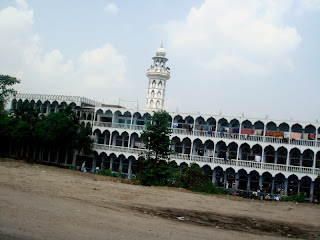
Madrasah near Kachpur ghat
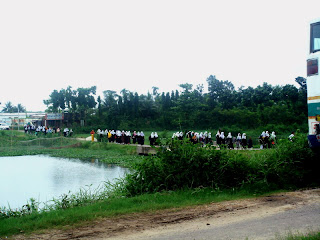
female students of a madrasah

Dhaka- Chittagong highway at Sonargaon-Mograpara

female workers

Madrasah near Kachpur ghat

female students of a madrasah

Dhaka- Chittagong highway at Sonargaon-Mograpara

female workers

Hindu pilgrims for a holy dip in Brahmaputra river at "Langalband"
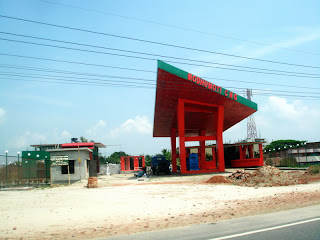
filling station under conastruction

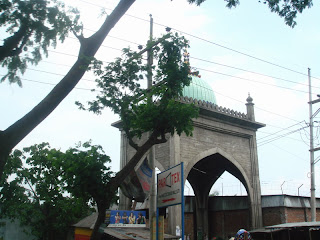
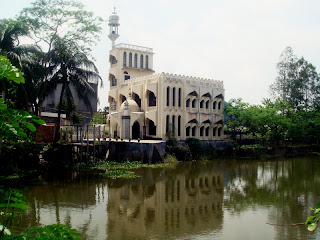
Masjid on the highway

Museum- Sonargaon
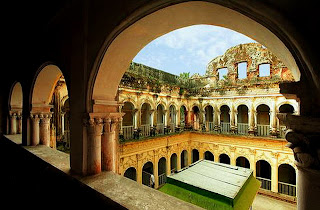
ruins of Bara Sardar Bari, Sonargaon (from flicker)

Panam nagar at Sonargaon (living place for rich hindu merchants during late 19th century)

filling station under conastruction


Masjid on the highway

Museum- Sonargaon

ruins of Bara Sardar Bari, Sonargaon (from flicker)

Panam nagar at Sonargaon (living place for rich hindu merchants during late 19th century)


Mograpara bus stand on Dhaka-Ctg highway

Secondary school in Mograpara

an old house

entry gate of Dargah Khanqah and Madrasah in Mograpara

Tomb complex with bangla roof

graves of muslim saints and disciples

tomb of a spiritual leader

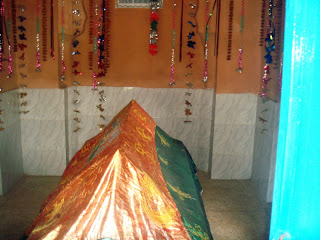
Tomb of Hazrat Syed Ibrahim Daneshmand

Mosque and Tomb of Pir Mohammad Yusuf built in 1700 AD (pic: Brennand 1872). On the left the tomb consists of two elongated, dome-roofed buildings, each surmounted by two pinnacles once covered with or formed of gold.
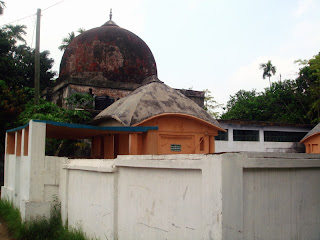
tomb complex and the historical Masjid

Historical Masjid and its extension
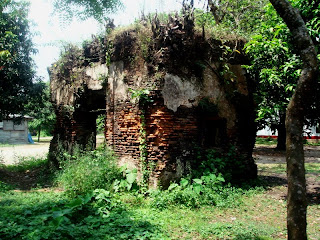
ruins of a historical building
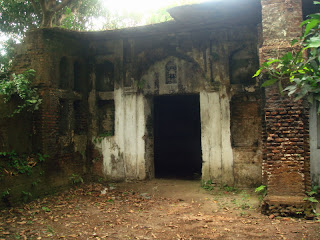
remains of what was known as madrasah and library- founded by Abu Tawwamah

underground passage to Library and meditation room
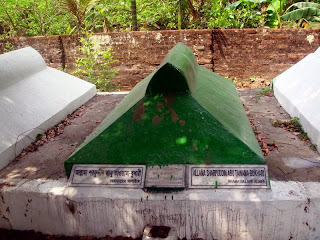
Tomb of Allama Sharfuddin Abu Tawwama Bukhari
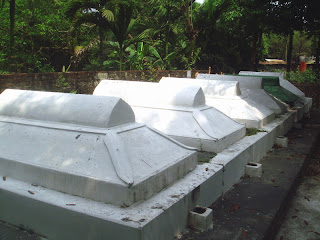
Tombs of old Islamic scholars, preachers and sufis

near the masjid and dargah of Panch Pir

tombs of Panch Pir (5 saints)

names of saints imprinted on wall by the present caretaker often


tomb of a spiritual leader


Tomb of Hazrat Syed Ibrahim Daneshmand

Mosque and Tomb of Pir Mohammad Yusuf built in 1700 AD (pic: Brennand 1872). On the left the tomb consists of two elongated, dome-roofed buildings, each surmounted by two pinnacles once covered with or formed of gold.

tomb complex and the historical Masjid

Historical Masjid and its extension

ruins of a historical building

remains of what was known as madrasah and library- founded by Abu Tawwamah

underground passage to Library and meditation room

Tomb of Allama Sharfuddin Abu Tawwama Bukhari

Tombs of old Islamic scholars, preachers and sufis

near the masjid and dargah of Panch Pir

tombs of Panch Pir (5 saints)

names of saints imprinted on wall by the present caretaker often


Panch Pir Masjid (pic 1872 Brennand)


inside historical masjid of Panch Pir Dargah


inside historical masjid of Panch Pir Dargah

outside of Panch Pir Tomb

Panch Pir Dargah Govt. primary school

some cheerful faces from the local school

Mograpara countryside- west view


old house

Mograpara countryside- west view


old house

Khaas Nagar Talab, Sonargaon (pic: 1872 by Bernnand)

old pond and 2 ghats

outside of Tomb of Sultan Ghiyasuddin Azam Shah
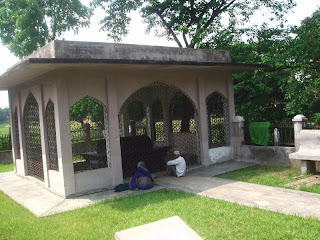
Tomb structure of Sultan Ghiyasuddin Azam Shah (died 1410 AD)
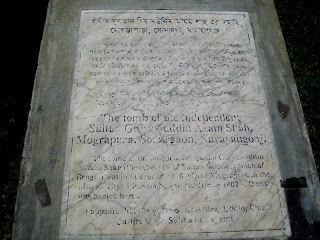

Tomb stone of Sultan of Bengal Ghiyasuddin Azam Shah (also known as Kala Shah tomb)- recent pic

Tomb stone renovated during last century

Ruins of the Tomb stone of Sultan Ghiyasuddin Azam Shah during late 19the century

outside of Tomb of Sultan Ghiyasuddin Azam Shah

Tomb structure of Sultan Ghiyasuddin Azam Shah (died 1410 AD)


Tomb stone of Sultan of Bengal Ghiyasuddin Azam Shah (also known as Kala Shah tomb)- recent pic

Tomb stone renovated during last century

Ruins of the Tomb stone of Sultan Ghiyasuddin Azam Shah during late 19the century

Tomb of Qazi who held trial of the Sultan seen in the background

Once a navigable canal near the historical places
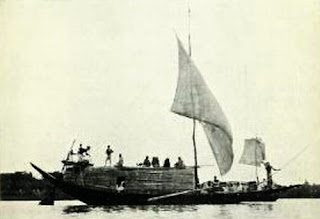
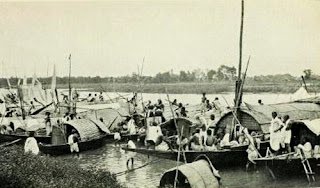
Boats anchored for the night at Sonargaon (from travel book of Bradley-Birt, late 19th century)

Once a navigable canal near the historical places


Boats anchored for the night at Sonargaon (from travel book of Bradley-Birt, late 19th century)

view through the central arch of a bridge over a canal in Sonargaon (pic: 1870s)

map mograpara-panam
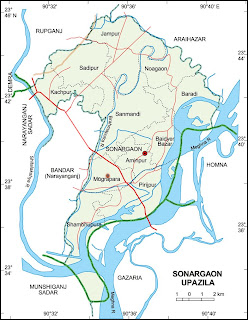
Map of Sonargaon-Mograpara
Sonargaon-Mograpara: The land between the Sitalakkha and Megna Rivers located 28 km east of Dhaka (on Dhaka-Chittagong highway) was known to be the seat of 'Deva' Dynasty until 13th century. After Muslim conquest in the 14th century, Sonargaon became the seat of an independent ruler under Ghiyasuddin Bahadur Shah. After his fall, it remained the headquarters of the eastern province of Bengal under the Tughlaqs till 1338.

Map of Sonargaon-Mograpara
Sonargaon-Mograpara: The land between the Sitalakkha and Megna Rivers located 28 km east of Dhaka (on Dhaka-Chittagong highway) was known to be the seat of 'Deva' Dynasty until 13th century. After Muslim conquest in the 14th century, Sonargaon became the seat of an independent ruler under Ghiyasuddin Bahadur Shah. After his fall, it remained the headquarters of the eastern province of Bengal under the Tughlaqs till 1338.
Sonargaon emerged as the capital of an independent Sultanate under Fakhruddin Mubarak Shah (1338-1349) and his son Ikhtiyaruddin Gazi Shah (1349-1352). Iliyas Shah, an inhabitant of Sijistan — the country to the east of Persia, led a campaign from the north and conquered Bengal to consolidate Iliyas Shahi Dynasty.
By the second quarter of the fourteenth century Sonargaon was developed into a commercial metropolis; seafaring boats could easily reach from west Asian and Southeast Asian countries. Travellers like Ibn Batuta, Ma Huan, Fahiean and Ralf Fitch visited Sonargaon. Ibn Batuta describes Sonargaon as an important port city which had direct commercial relations with countries like China, Indonesia (Java) and the Maldives. The Chinese envoy Ma Huan found Sonargaon a great commercial metropolis.
Ghiyasuddin Azam Shah (1390-1411 AD) the third sultan of the Iliyas Shahi dynasty of Bengal earned great name for his ideal character, patronage of learning and for good administration. The events of his life are so variegated that he may be compared to a prince in a fairy tale. He had a profound regard for the law. It is on record that the sultan while practicing with a bow hit the son of a widow with an arrow and caused his death. The widow appeared before the Qazi and brought a charge of murder against the sultan. Ghiyasuddin Azam Shah, being summoned by the Qazi, appeared before the court like an ordinary accused person, made graceful submission to the custodian of law and satisfied the complainant by offering a suitable indemnity in accordance with the decree. When the trial was over the Qazi stood up and praised the sultan for his regard for the law. At this the sultan remarked that he would have instantly beheaded the Qazi if he was found wanting in his duty as a judge. The Qazi smilingly retorted that he would have scourged His Majesty had he not obeyed the law.
Himself a scholar and poet, Sultan Ghiyasuddin Azam Shah held literary men in great esteem. He corresponded with the famous Iranian poet Hafiz and inviting him to visit Bengal. Ghiyasuddin Azam Shah contributed a good deal to the development of Bengali literature; Shah Muhammad Sagir wrote his famous work, Yusuf-Zulekha, under his patronage. Like his father Sikandar Shah and grandfather Iliyas Shah, Ghiyasuddin Azam Shah had great respect and reverence for the Alims and the Sufis. He paid great homage to Shaikh Muzaffar Shams Balkhi of Bihar. He gave all kinds of help to pilgrims to the holy cities of Makka and Madina. Ghiyasuddin Azam Shah is known for his friendly relations with foreign countries, sent envoys to Makka, Madina and China. This great sultan died in 814 AH/1410 AD and buried in Mograpara (see tomb pic above).
After Mughal conquest of Bengal Subehdar Islam Khan Chisti transferred the capital from Rajmahal to Dhaka in 1608 AD. The political and economic significance of Sonargaon soon began to diminish and its establishment, buildings and shrines crumbled.
It is evident from the extant archaeological remains that an extensive Muslim settlement had grown over the entire Mograpara and Goaldi region, and perhaps the Muslim capital city developed in and around Mograpara extending towards Goaldi and Baidyer Bazaar. Muslin produced in Sonargaon, especially its finest variety called khasa, had a worldwide reputation. Sheathed in greenery and encircled by serene lakes and transparent pools, Sonargaon (literally golden village) was a feast to the eye. Sea lanes from Sonargaon directly went to Java Island at one point of time. Sonargaon was not only administrative capital, but also developed in culture, art and science. Sonargaon developed into a seat of Islamic learning under the scholar Maulana Sharfuddin Abu Tawwamah of Bokhara who came to Sonargaon (sometime between 1282 and 1287) and established there a ‘Khanqah’ and a madrasah wherein all branches of Islamic learning as well as secular sciences were taught and studied. This madrasa earned a great reputation throughout the subcontinent and attracted students from far and near. Sharfuddin Yahya Maneri, the celebrated sufi scholar of Bihar, was a product of this madrasa. The present Dargahbari in Mograpara is possibly the site of that centre of learning.
In the later period Shaikh Alaul Haq, his grandson Shaikh Badr-i-Islam and great-grandson Shaikh Zahid imparted religious and mystical teaching in Sonargaon. The khanqah and madrasa founded by Abu Tawwamah appears to have been maintained by his spiritual successors and later by the renowned saint Shah Ibrahim Danishmand and his descendants like Shah Kamel, Shaikh Muhammad Yusuf and others. Sonargaon had once been a rendezvous of distinguished sufis and fakirs. There are references to the compilation of valuable works at Sonargaon, such as the Maqamat, a unique work on Islamic mysticism (tasawwuf) by Sharfuddin Abu Tawwamah; a Persian book on fiqh entitled Nam-i-Haq, either written by Abu Tawwamah or compiled (1304)) by one of his disciples on the basis of his teachings; an early fourteenth century work on fiqh entitled Majmu-i-Khani fi Ain-al-Ma'ani by one Kamal-i-Karim; the Tafsir-i-Tatarkhani and Fatwa-i-Tatarkhani compiled at the instance of Bahram Khan alias Tatar Khan, the Tughlaq governor of Sonargaon,
On the western side of the Dhaka-Chittagong highway, east of Bandar at Mograpara are the remains, such as, the Dargahbari complex with the Dargah building, Madrasa building, Fath Shah's Mosque (1484), Nahbat Khana, grave of Sharfuddin Abu Tawwamah, Tomb of Shah Ibrahim Danishmand, Tomb of Shah Kamel, Shaikh Muhammad Yusuf and Munna Shah Darwesh. The other remains of other group of spiritual saints lie further south in Damdama at Mograpara. Tomb of Ponkai Diwana at Gohatta, Panch Pir Dargah and a Mosque at Bhagalpur, Yusufganj Mosque, and Sheikh Saheb's Mosque at Darugola. Eminent historian, archeologist and professor emeritus Dr. Ahmed Dani in his book 'Dhaka-a record of changing fortunes' published in 1956 referred about 5 masonry graves of panch pir (5 saints) most noted among them was (Boro) Badr Alam. Although it is not certain who the Panch-Pirs (five Holy men) were, they were venerated in parts of Bengal particularly among poor or lower class village folk who sought asylum under their protection. There is a Mosque close to it. Thousand feet east of it is the tomb of Sultan Ghiyasuddin Azam Shah the earliest Muslim monument of present Bangladesh.
The historic place Mograpara now survives only in name. Sonargaon lost its eminence with the rise of Dhaka as capital. By the second half of the nineteenth century during British period when the capital was shifted to Kolkata, it 'dwindled to a village' with 'dense jungle'. Few medieval buildings, scattered in this region still exists in the villages of Aminpur, Dulalpur, Goaldi, Mograpara, Sadipur and Muazzampur etc. of the Upazilla Sonargaon and Bandar. The settlement of Panam nagar was however developed during British period to become the abode of rich hindu traders and merchants of Shahas and Poddar communities. Most of the Hindu merchants were Kolkata based absentee landlords who could be found there only in the autumn to celebrate the Durga-puja festival.
At present new 'hut-bazaars' and industries have come up there, schools for boys and girls and a Degree college have been established. Dhaka Chittagong highway runs through Sonargaon, Mograpara falling on the west side of road and Panam on the east side.
To visit Mograpara and Sonargaon Museum (Panam) from Dhaka taxi/auto rickshaw service would be better. Sonargaon bus services operate from Gulistan, Saidabad and other bus stands in Dhaka. Once in Mograpara bus stand, rickshaw can be hired for the entire trip inside villages. Local rickshaw drivers know all of these places. (ref: Banglapedia/Wikipedia)


