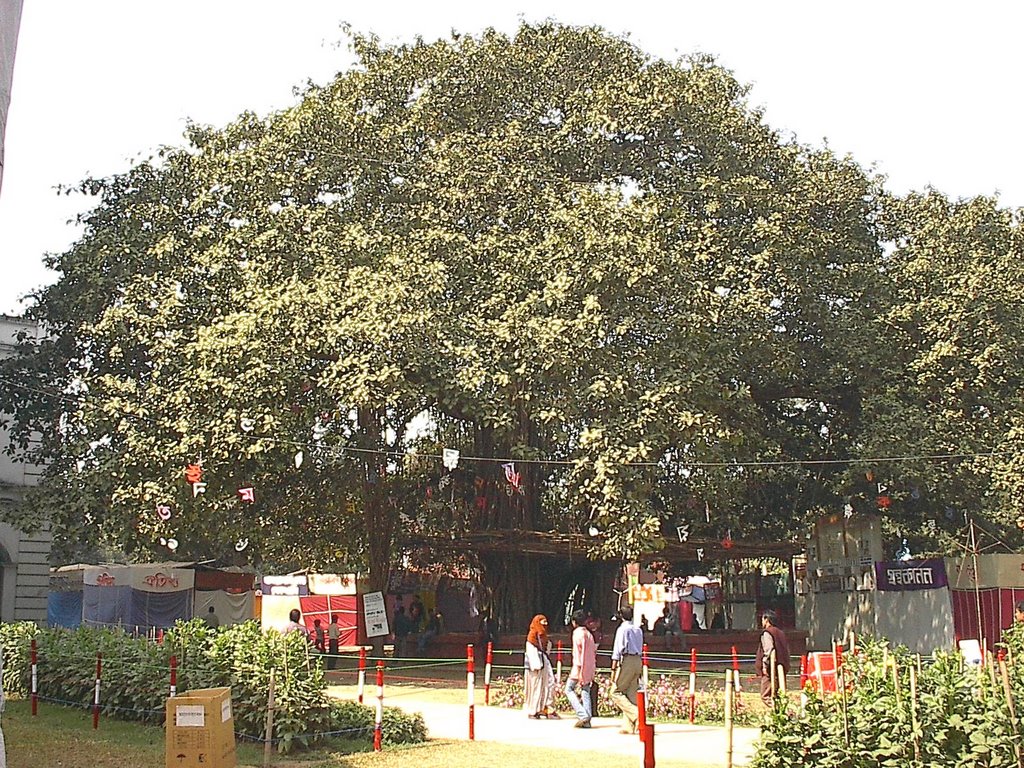
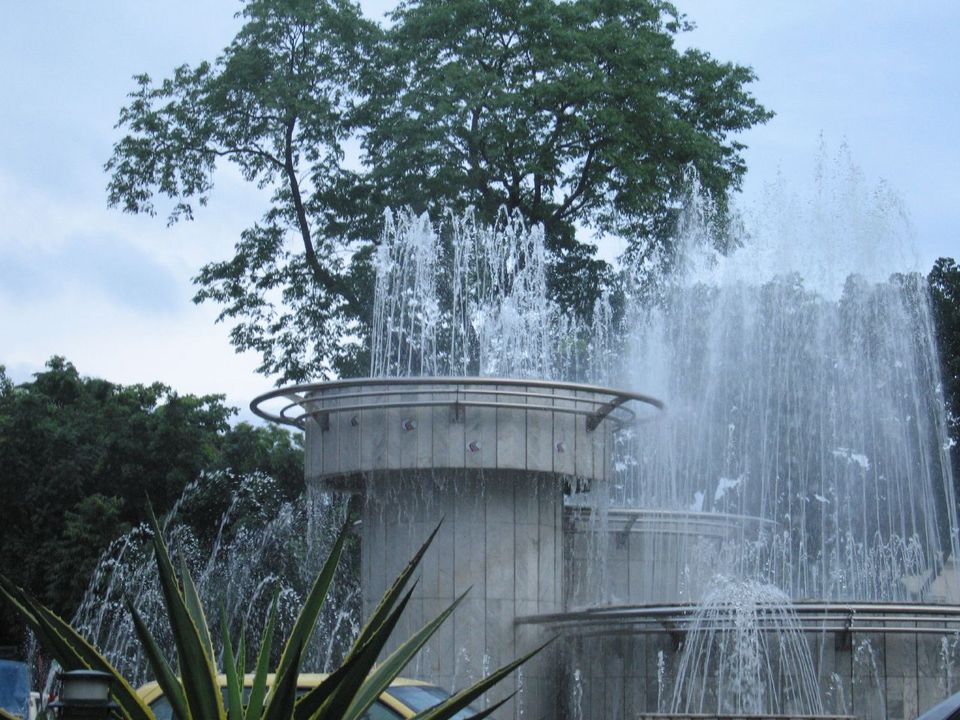
Ramna Botomul [Banyan tree]
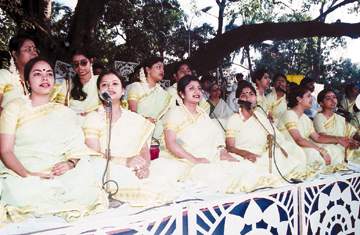


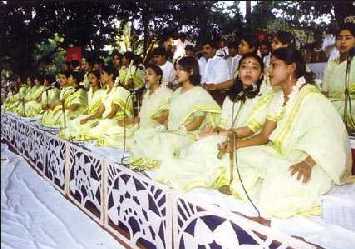
Performers at Botomul on 1st Boishakh - Bengali new year


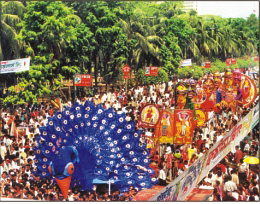
Carnival and rally
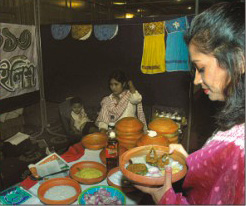
Paanta [soaked rice] and fried Hilsa fish
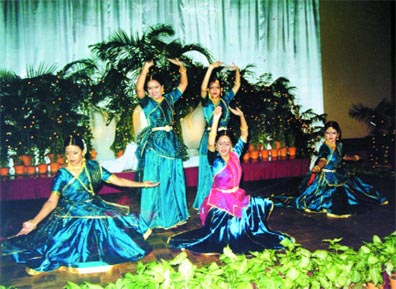
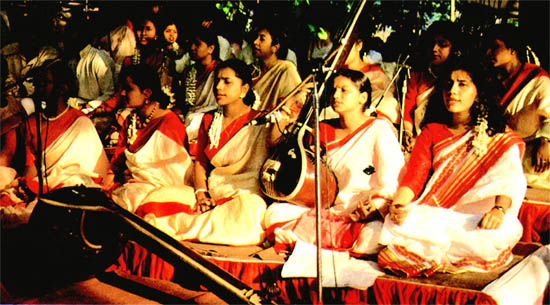
Cultural functions
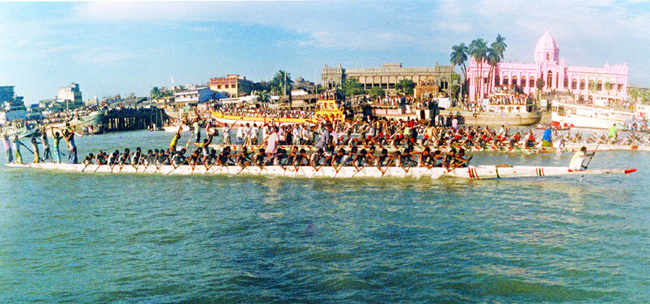
Boat race
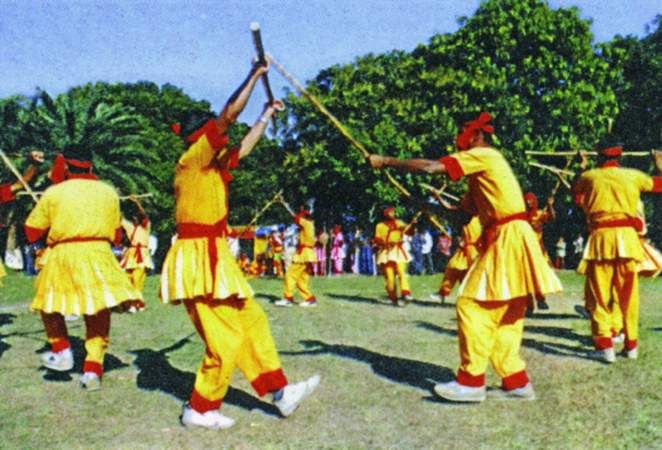
Lathikhela
The first day of the Bengali calendar "Pahela Baishakh" is celebrated as the New Year in Bangladesh.
Emperor Akbar introduced the Bengali calendar year on 10 March 1585, but it became effective from 16 March 1586, the day of his ascension to the throne. The calendar itself was formulated by a Muslim scholar of his court modeled on the Hegira calendar. Hegira [ Hijri ] is lunar calendar counted from the year of prophet Muhammad's (SM) flight (hijrat) to Medina in 622 AD).
The beginning of Bengali year was made to coincide with the harvest time in rural Bengal. Its introduction was aimed primarily at facilitating tax collection. The Bengali New Year is in summer, not a pleasant time in Bengal/Bangladesh, but it was fixed due to practical necessities. The Bengali year was accepted at the grass root level irrespective of religious differences.
The common man in Bangladesh as well as West Bengal refers to the Bengali calendar for his day-to-day activities. It can be said without any doubt and beyond argument that celebrations of Pahela Baishakh have no religious underpinning, it contributed to the growth of a secular value in society as a whole. In rural Bengal, the first day of Bangla calendar had been traditionally celebrated with 'Mela' (fair) associated with puppet show, folk songs etc. In some areas lathikhela (stick fight), bull fight and boat race (nouka baich) are still held, perhaps not on a scale that it used to be before.
The introduction of Bangla shon/Bengali year had not only survived, but at one time had also given the unique power of nationalistic feelings and unity to the separated/divided Bengali society.
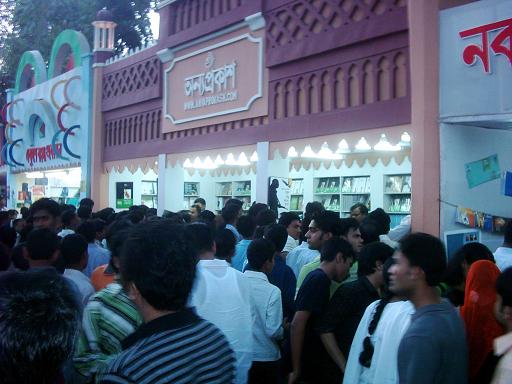
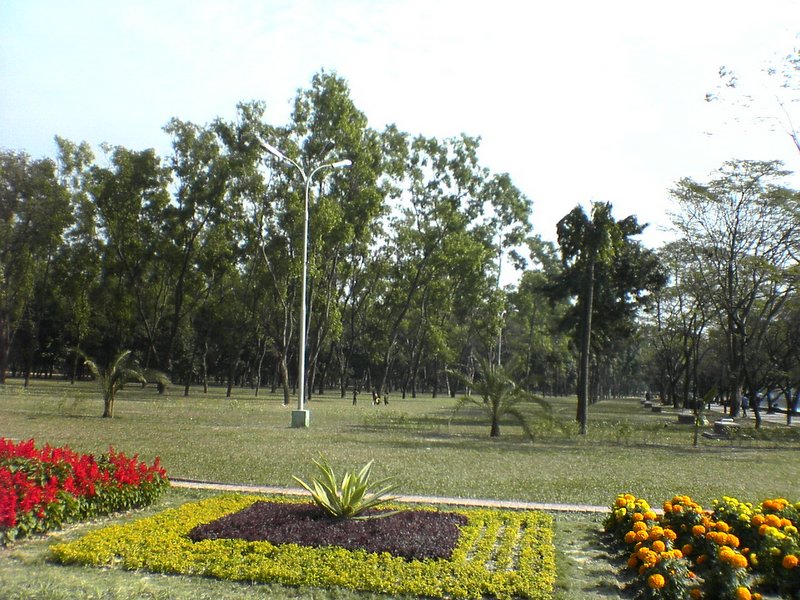
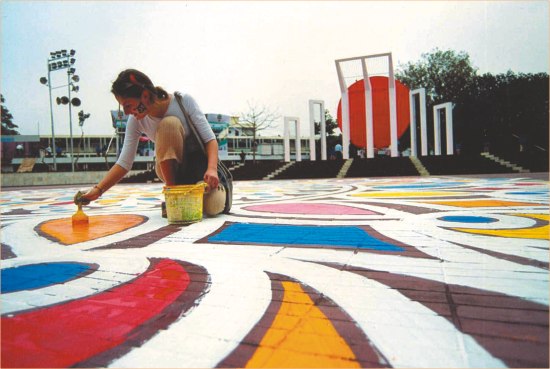
Since last 40 years, the programme in the Dhaka city starts with daybreak of new year at the Ramna 'Botomul' (Banyan tree)- a popular venue, where noted cultural group 'Chhayanaut' holds a cultural function with choral rendition of songs followed by Tagore's song “esho hey baishakh esho esho...”. Students of the Dhaka Institute of Fine Arts bring out rally in Ramna with large replicas of birds, animals and masks. Other cultural organizations also hold cultural function of 'Baul' song, puppet show and 'Jatra'. TV channels bring out special live programme and cultural shows of their colour and value, and the owners of theme parks organize Band shows that attract urban youth. Apart from it, small fairs are arranged by the clubs where 'pithas', local agricultural products and handicrafts are sold.
Eating of ‘paanta’ (soaked rice) with hilsa fish on this day is getting popularity among middle class in urban cities. As disparity- social, religious, cultural, political and economic - becomes more acute every year, the celebration of national festival and unity seems to have become exclusive to the haves, with have-nots having no space.
Eating of ‘paanta’ (soaked rice) with hilsa fish on this day is getting popularity among middle class in urban cities. As disparity- social, religious, cultural, political and economic - becomes more acute every year, the celebration of national festival and unity seems to have become exclusive to the haves, with have-nots having no space.